
Texas-Style Smoked Brisket
 Main15h 30m12 servingsHard
About this recipe
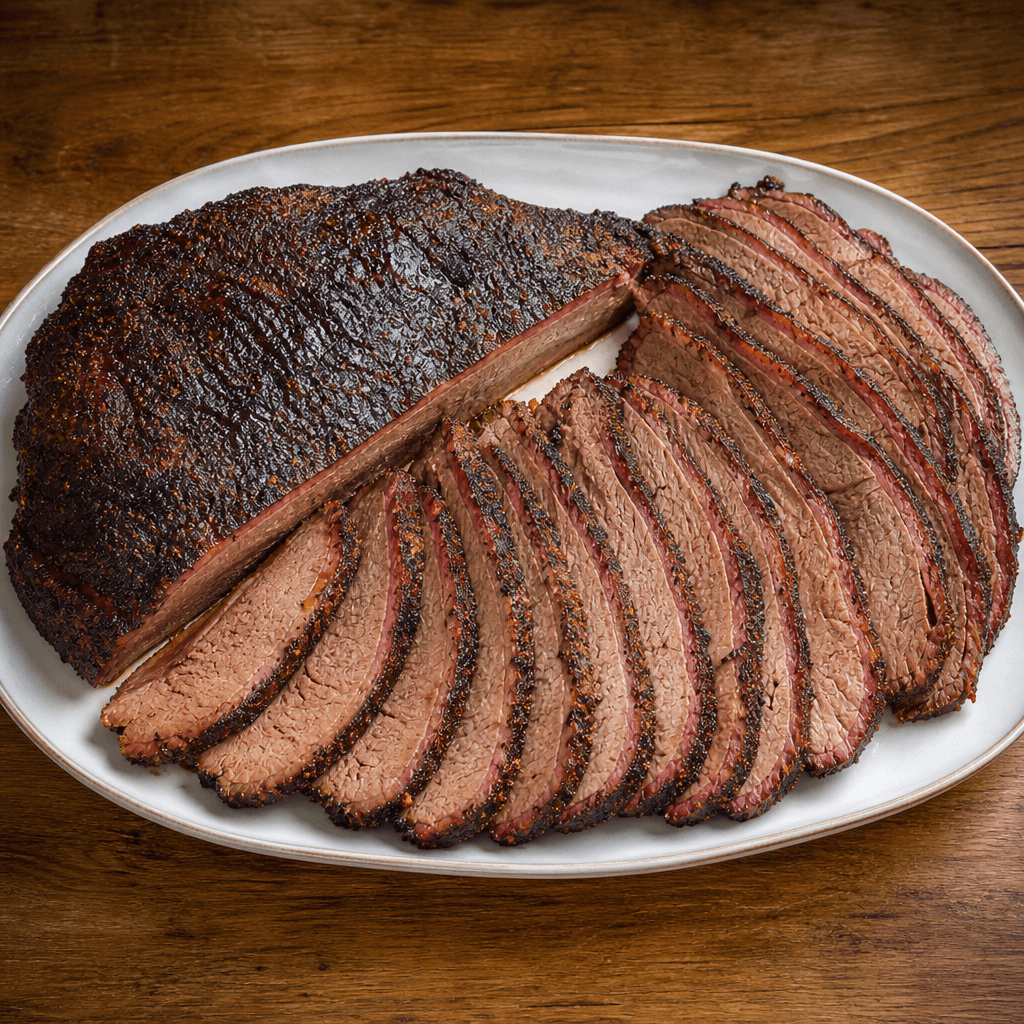
A true Texas-style smoked brisket with a bold black pepper and salt bark, slow-smoked over oak or post oak wood until impossibly tender and juicy. This approachable, well-tested recipe walks you through every step — from trimming and rubbing the night before to the all-important rest — so you get a mahogany bark, a rosy smoke ring, and melt-in-your-mouth slices every time. No fancy injections or complicated techniques — just great beef, smoke, and patience.
Instructions
- 1
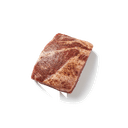
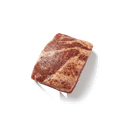
Place the cold packer brisket fat-side up on a large cutting board. Using a sharp boning knife, trim the fat cap to an even 1/4-inch thickness — enough to protect the meat during the long cook, but not so thick it won't render. Remove any hard, waxy fat deposits (they won't render). Flip the packer brisket and trim any large silver skin or very thin, floppy edges that will burn rather than bark up. A well-trimmed packer brisket is the single biggest key to a great result.
- 2
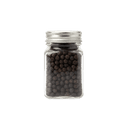
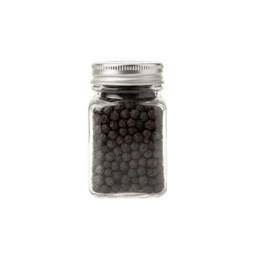
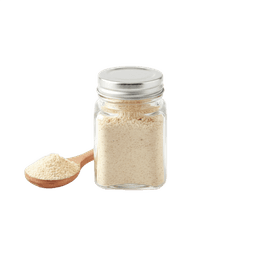
Mix the coarse black pepper, kosher salt, and garlic powder (if using) together in a small mixing bowl. This is a classic Central Texas-style rub — simple and intentionally minimal. Pat the packer brisket completely dry with paper towels. Season all sides generously and evenly with the rub, pressing it lightly into the meat so it adheres. You should see a visible, even coating. Wrap loosely in plastic wrap or place on a wire rack over a baking sheet and refrigerate uncovered for at least 1 hour, or overnight (up to 12 hours) for the best bark development.
- 3
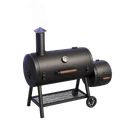
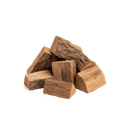
Remove the packer brisket from the fridge 30–60 minutes before smoking to take the chill off. Set up your smoker for indirect heat and preheat to ![250°F]. Add 3–4 oak wood chunks to your firebox or charcoal. Maintain a clean, thin blue smoke — avoid thick white smoke, which makes the meat bitter. If using an offset smoker, keep the fire small and steady. If using a pellet grill, set to ![250°F] with oak or competition blend pellets.
- 4
Place the packer brisket fat-side up directly on the smoker grate. Insert a leave-in probe meat thermometer into the thickest part of the flat (the leaner, thinner end). Smoke unwrapped at ![250°F], maintaining consistent temperature. Add a wood chunk every 45–60 minutes for the first 4 hours to keep smoke going. Do not open the smoker unnecessarily — every peek adds 15 minutes. Smoke until the internal temperature reaches %[165–170°F] and the bark is dark mahogany and firm to the touch. This typically takes 6–8 hours.
- 5
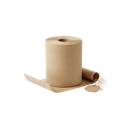
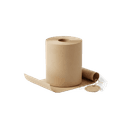
Once the packer brisket hits %[165–170°F] and has a solid bark, remove it from the smoker and place it on a sheet of unbleached butcher paper (about 4–5 feet long). Wrap it tightly, tucking the ends under like a burrito. This is the 'Texas Crutch' — it powers through the stall (when moisture evaporation temporarily plateaus the temperature) while preserving the bark better than foil. Return the wrapped packer brisket to the smoker, fat-side up. Continue cooking at ![250°F] until the internal temperature reaches %[200–205°F].
- 6
Temperature is a guide, but the probe test is the true finish line. When the packer brisket hits %[200–205°F], insert your instant-read meat thermometer or a toothpick into the thickest part of the flat and into the point (the thicker, fattier end). It should slide in with zero resistance — like pushing into room-temperature butter. If you feel any resistance, keep cooking and check every 30 minutes. Don't pull it early; an under-rested, under-cooked packer brisket is the most common mistake.
- 7
This step is just as important as the cook. Once the packer brisket passes the probe test, remove it from the smoker while still wrapped in the butcher paper. Place it in an empty cooler (no ice), fat-side up, and close the lid. Let it rest for a minimum of 1 hour — 2 hours is better, and up to 4 hours is perfectly safe and ideal. This rest allows the muscle fibers to relax and the juices to redistribute throughout the meat. Skipping or shortening the rest will result in a dry packer brisket.
- 8
Unwrap the packer brisket over a cutting board to catch all the precious juices. Separate the flat from the point by cutting along the fat seam that runs between them. Slice the flat against the grain into pencil-thick slices (about 1/4 inch). For the point, rotate it 90 degrees and slice against its grain as well — point slices are fattier and more marbled, often called 'burnt ends' territory. Drizzle any collected juices over the slices. Serve immediately on butcher paper with white bread, pickles, and sliced onions — the Texas way.