

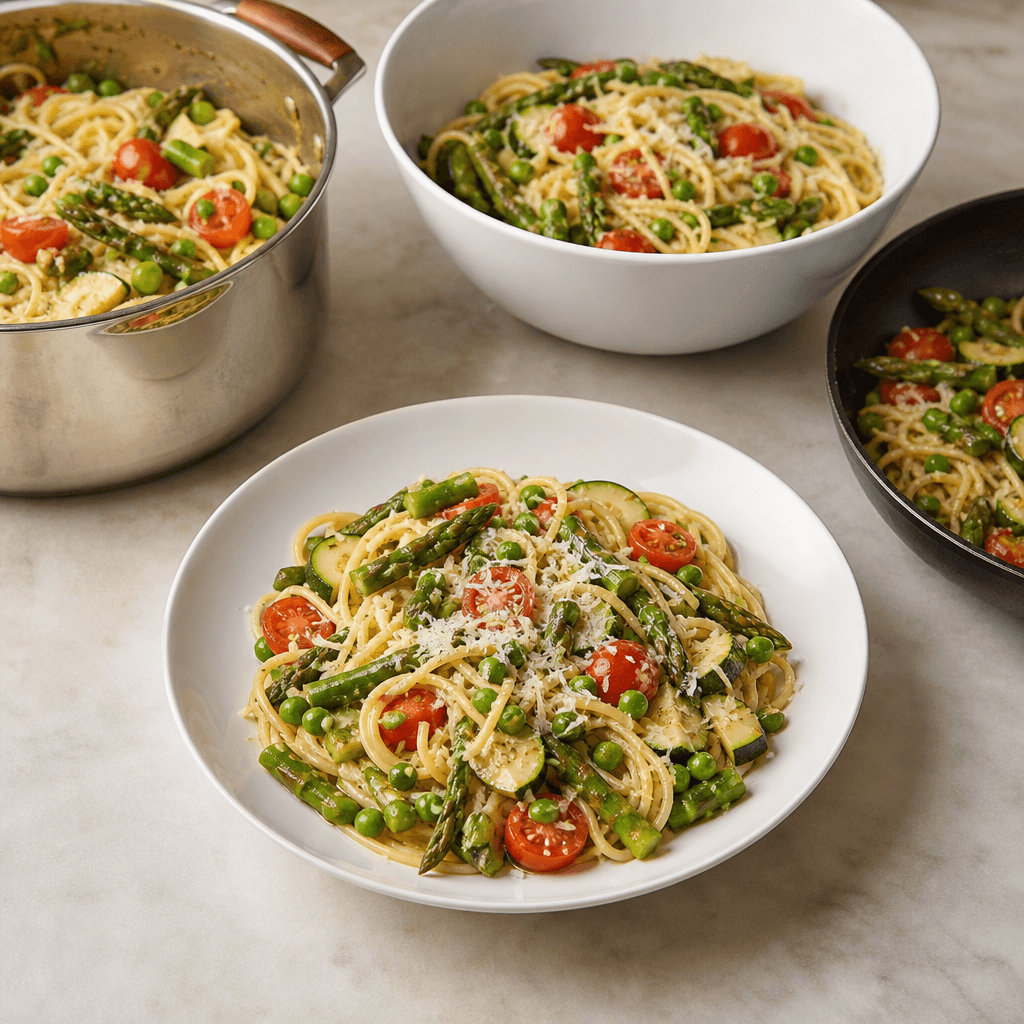
Pasta de Vegetales de Primavera
 Principal35 min4 porcionesFácil
Sobre esta receta
Una pasta brillante, fresca y satisfactoria cargada de los mejores vegetales de la temporada — espárragos, guisantes, calabacín y tomates cherry — todo mezclado en una salsa ligera de ajo y vino blanco con abundante Parmesano. Este es un favorito confiable entre semana que se prepara en menos de 30 minutos y sabe a primavera en cada bocado.
Instrucciones
- 1
Bring a large pot of water to a boil. Season it very generously with kosher salt — it should taste pleasantly salty, like mild seawater. This is your only chance to season the pasta itself.
- 2
Cook the pasta according to package directions until just al dente (usually 1 minute less than the package suggests). Before draining, scoop out at least ½ cup of the starchy pasta cooking water reserved before draining and set it aside — this is key to building your sauce. Drain the pasta and set aside.
- 3
While the pasta cooks, heat the olive oil in a large skillet over ^[medium heat]. Add the shallot and cook, stirring occasionally, until softened, about 2–3 minutes. Add the sliced garlic and red pepper flakes (if using) and cook for 1 more minute until fragrant. Don't let the garlic brown.
- 4
Add the zucchini halved lengthwise to the skillet and cook, stirring occasionally, until just tender, about 3 minutes. Add the asparagus tough ends snapped off pieces and cook for another 2 minutes — they should be bright green and just barely tender.
- 5
Pour in the white wine and let it simmer, stirring occasionally, until mostly reduced, about 2 minutes. Add the cherry tomatoes halved and peas, stir to combine, and cook for 1–2 minutes until the tomatoes begin to soften slightly.
- 6
Add the drained pasta directly to the skillet. Pour in ¼ cup of the reserved pasta cooking water reserved before draining and add the butter. Toss everything together vigorously with tongs for 1–2 minutes over ^[medium heat]. The starchy water and butter will emulsify into a light, silky sauce that coats every strand. Add more pasta cooking water reserved before draining a splash at a time if the pasta looks dry.
- 7
Remove the skillet from heat. Add the lemon zest from about 1 lemon, lemon juice, and freshly grated Parmesan cheese. Toss well to combine. Taste and adjust kosher salt and black pepper as needed.
- 8
Divide the pasta among warm bowls. Top with torn fresh basil leaves, chopped parsley (if using), an extra grating of Parmesan cheese, and a crack of black pepper. Serve immediately.