

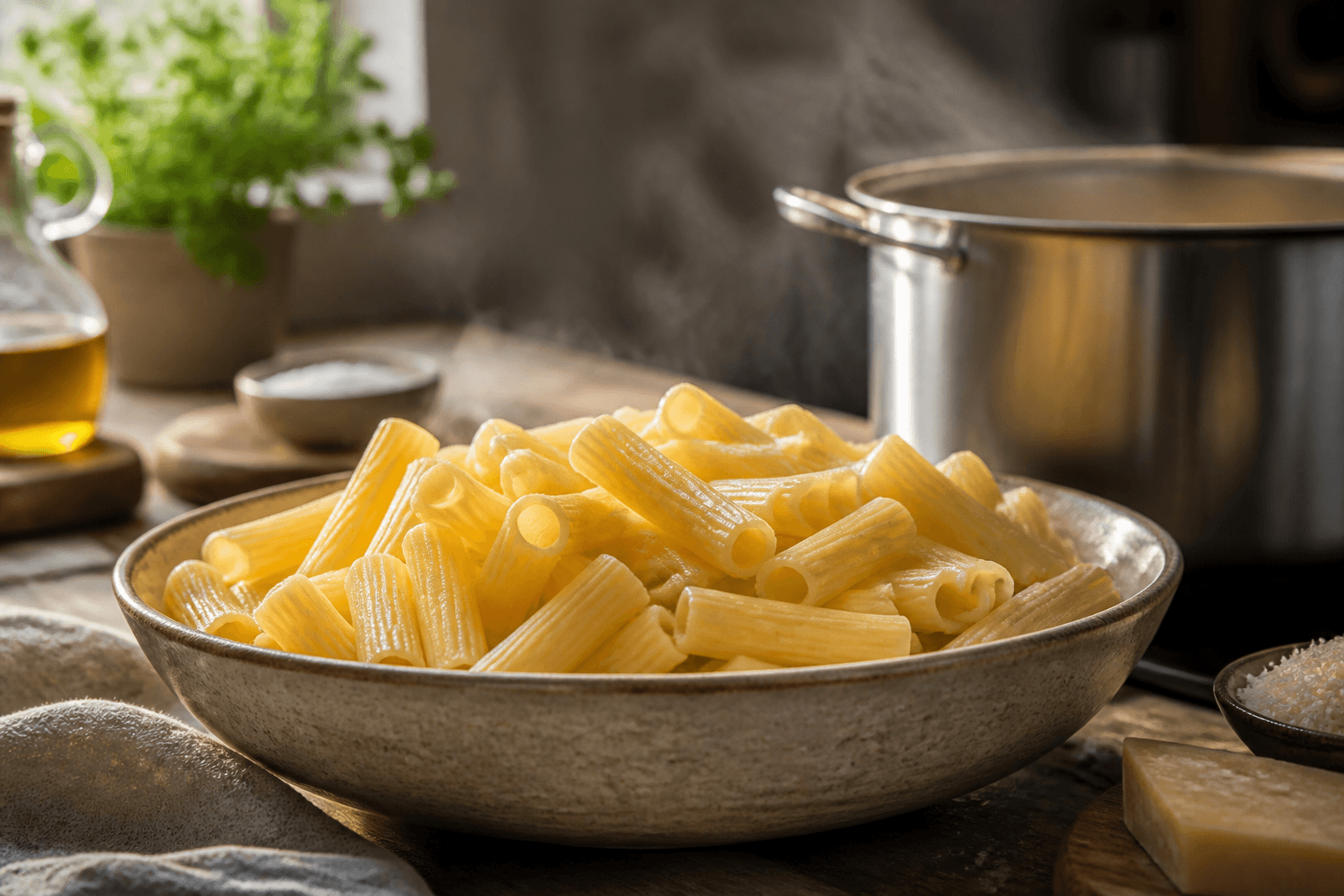

Each variation is built around a specific method and equipment. Pick one first, then the instructions, ingredients, and actions below update to match.
Cooking goal
- Total time
- 14 min
- Cook
- 8–14 min
Cooking goal
- Total time
- 14 min
- Cook
- 8–14 min
Servings
4
Servings
4
 1 lb Pasta
 Salt
Salt Olive Oil
- 1 lb Pasta
- Salt
- Olive Oil

Pot
Required for this method
Pot
Required for this method
Instructions
- 1
Gear & Ingredients to Prep First
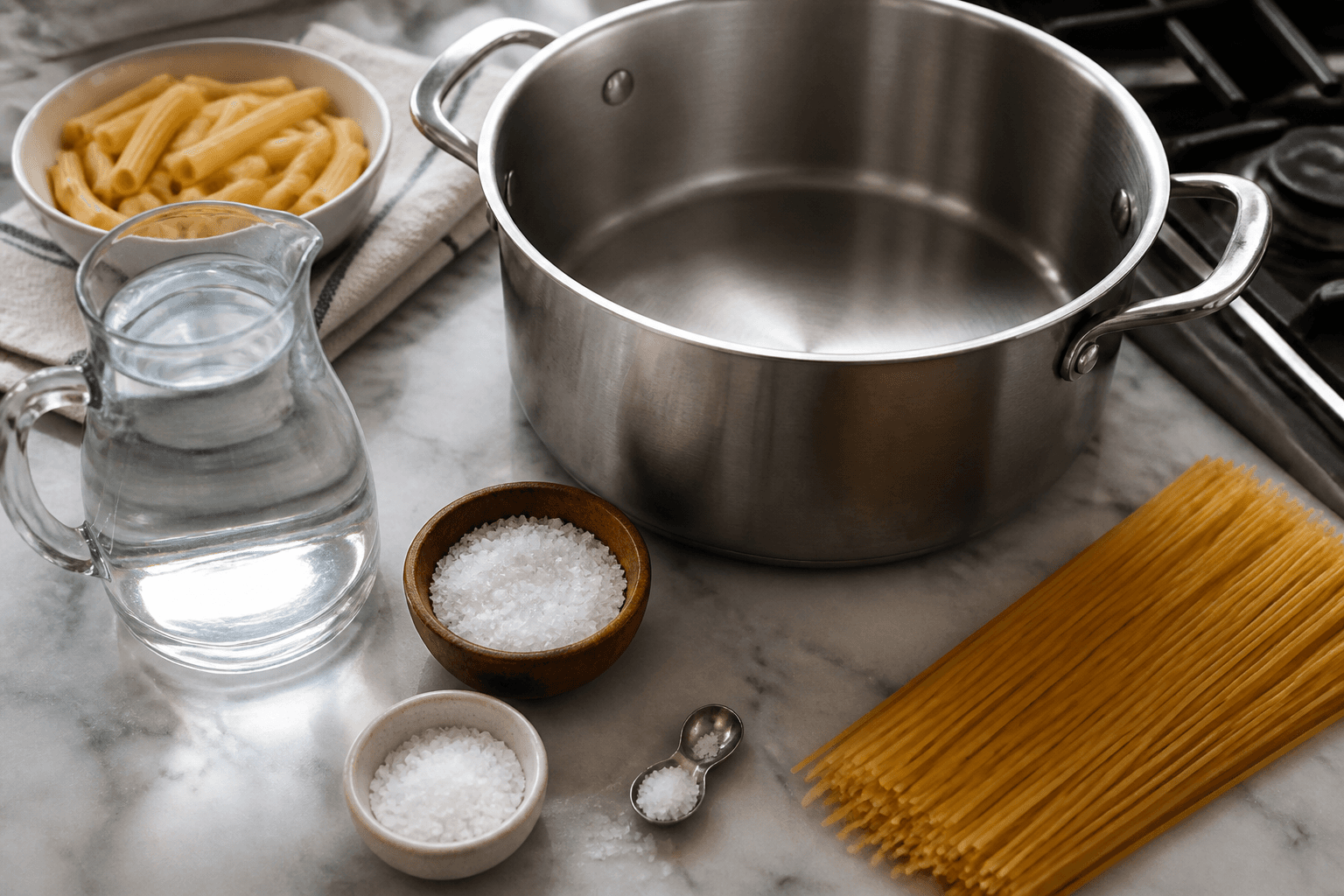
Grab a 6–8 quart pot — pasta needs room to move. Fill with 4–6 quarts of cold water for 1 pound of dried pasta. Measure 1–3 tablespoons of kosher or table salt — non-negotiable, it seasons the pasta from the inside. Have a heat-proof spoon or pasta fork ready for stirring. Set a colander in the sink before you start. Keep a heatproof measuring cup nearby to scoop 1–2 cups of starchy cooking water before draining — you'll want it for finishing sauces.
- 2
How to Boil Pasta
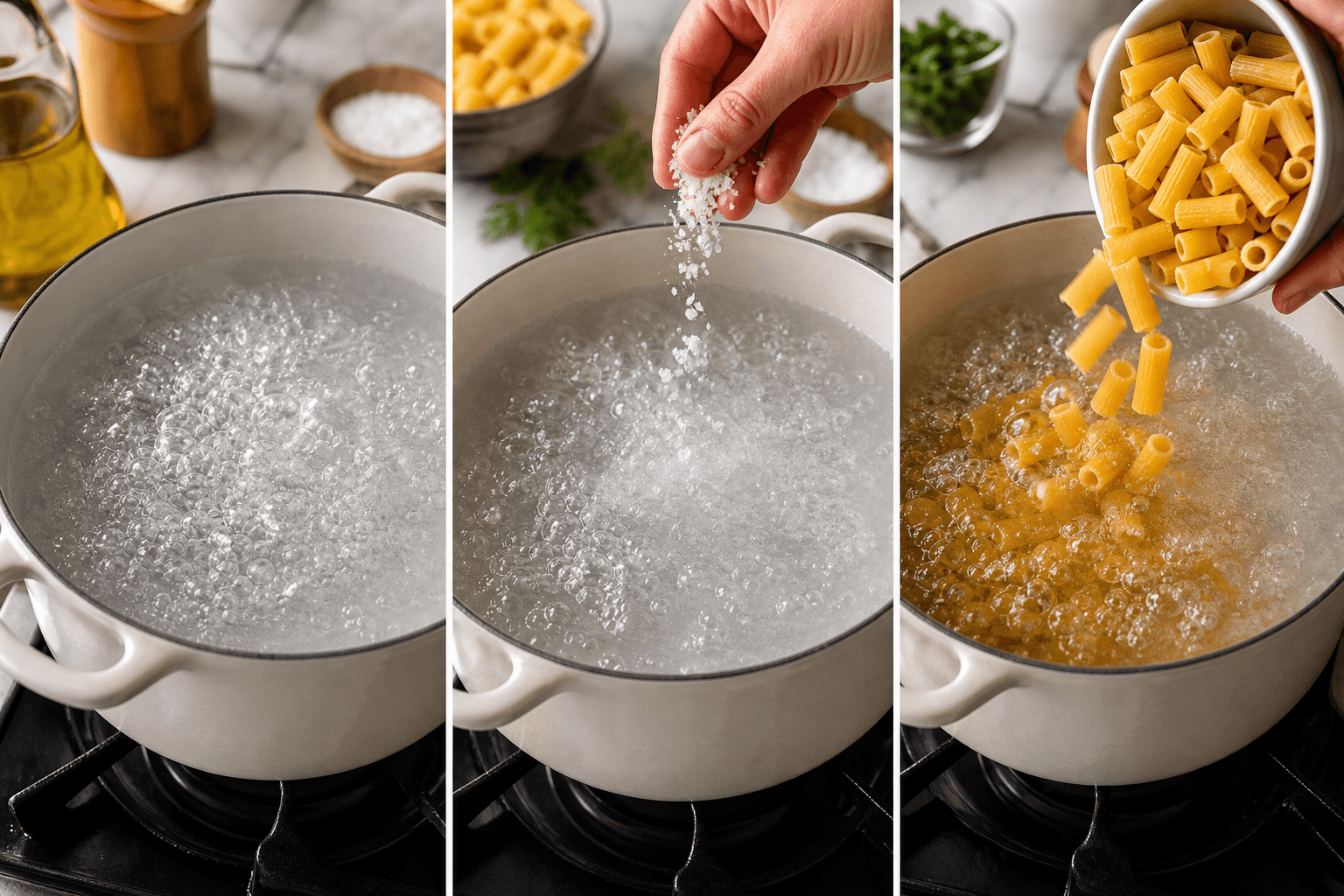
- Fill a large pot with cold water and bring to a full, rolling boil over high heat. Don't add pasta early.
- Add salt generously once boiling — the water should taste like well-seasoned broth. Stir to dissolve.
- Add dried pasta all at once. For long noodles, press them in as they soften rather than breaking them. Stir immediately.
- Keep heat high to maintain a rapid boil. Stir every 1–2 minutes, especially early on, to prevent sticking.
- Start tasting about 1 minute before the low end of the package time — usually around 7–8 minutes in. Total time for dried pasta is typically 8–14 minutes depending on shape and brand.
- Bite a piece to test: tender throughout with slight firmness at the center is al dente. A white chalky line means more time needed; no resistance means overcooked.
- For baked dishes, pull pasta slightly early — it cooks further in the oven. For finishing in sauce, pull 1 minute before your target doneness.
- Before draining, scoop out at least 1 cup of starchy cooking water and set aside. Then drain promptly through a colander.
- 3
Drain, Sauce, and Avoid Common Mistakes
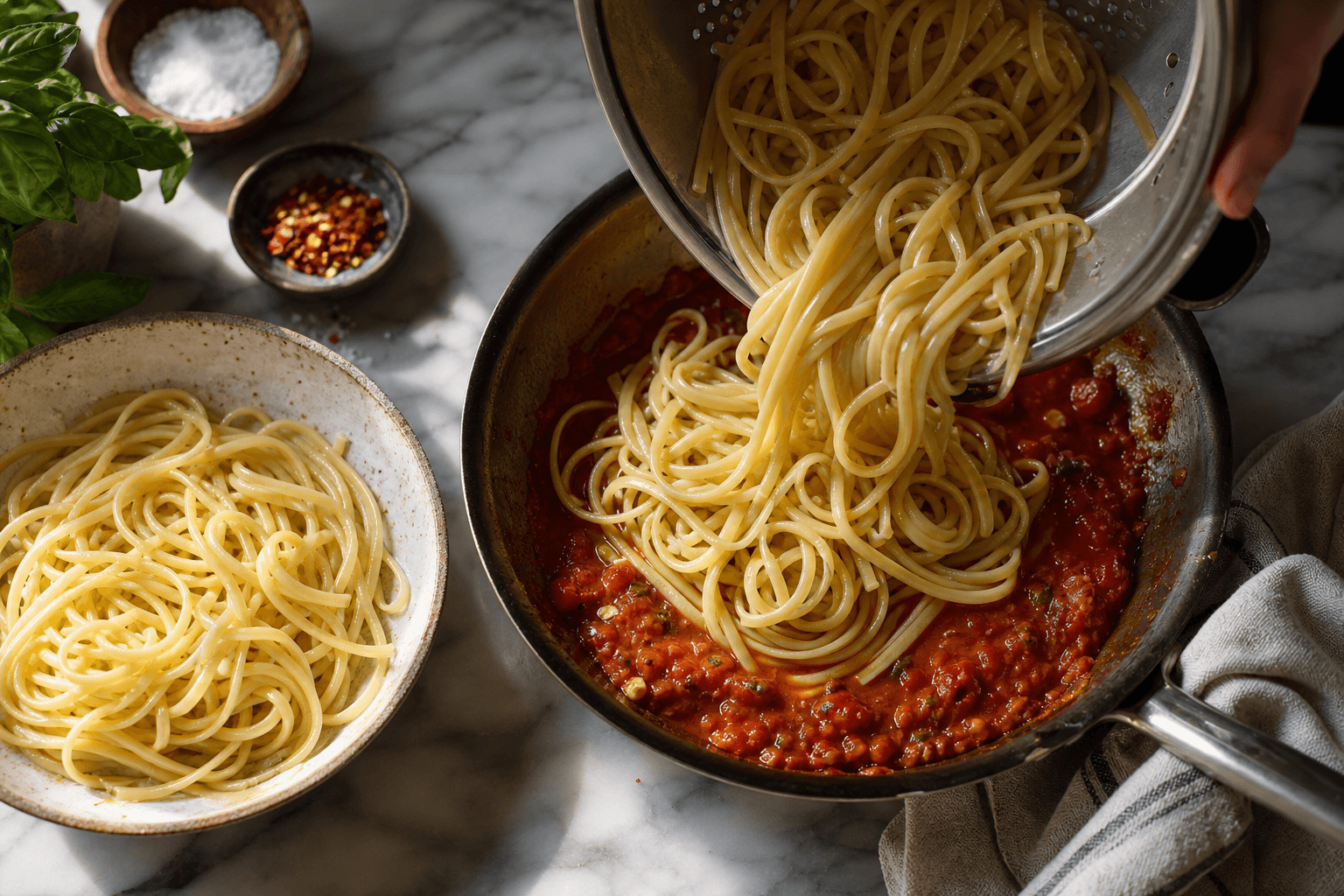
Do not rinse pasta after draining — it washes away the starch that helps sauce stick. If not saucing immediately, toss with a small drizzle of olive oil to prevent clumping. For warm sauce: add drained pasta directly to the pan over low to medium heat, toss to combine, and use reserved pasta water a splash at a time to loosen and bind the sauce. For pasta salad: cook to full doneness, drain, toss with olive oil while warm, cool to room temperature, then refrigerate. Avoid these mistakes: starting before the water reaches a full boil, skipping salt, overcrowding the pot, and not stirring in the first few minutes.
Event planning
Hosting a dinner? Coordinate who brings what
Create a shareable signup page for potlucks and group meals — guests RSVP, claim dishes, and see open slots.
- One shareable link — no more spreadsheet chaos
- Guests RSVP, add headcount, and claim exactly what they bring
60-day free trial · No credit card required