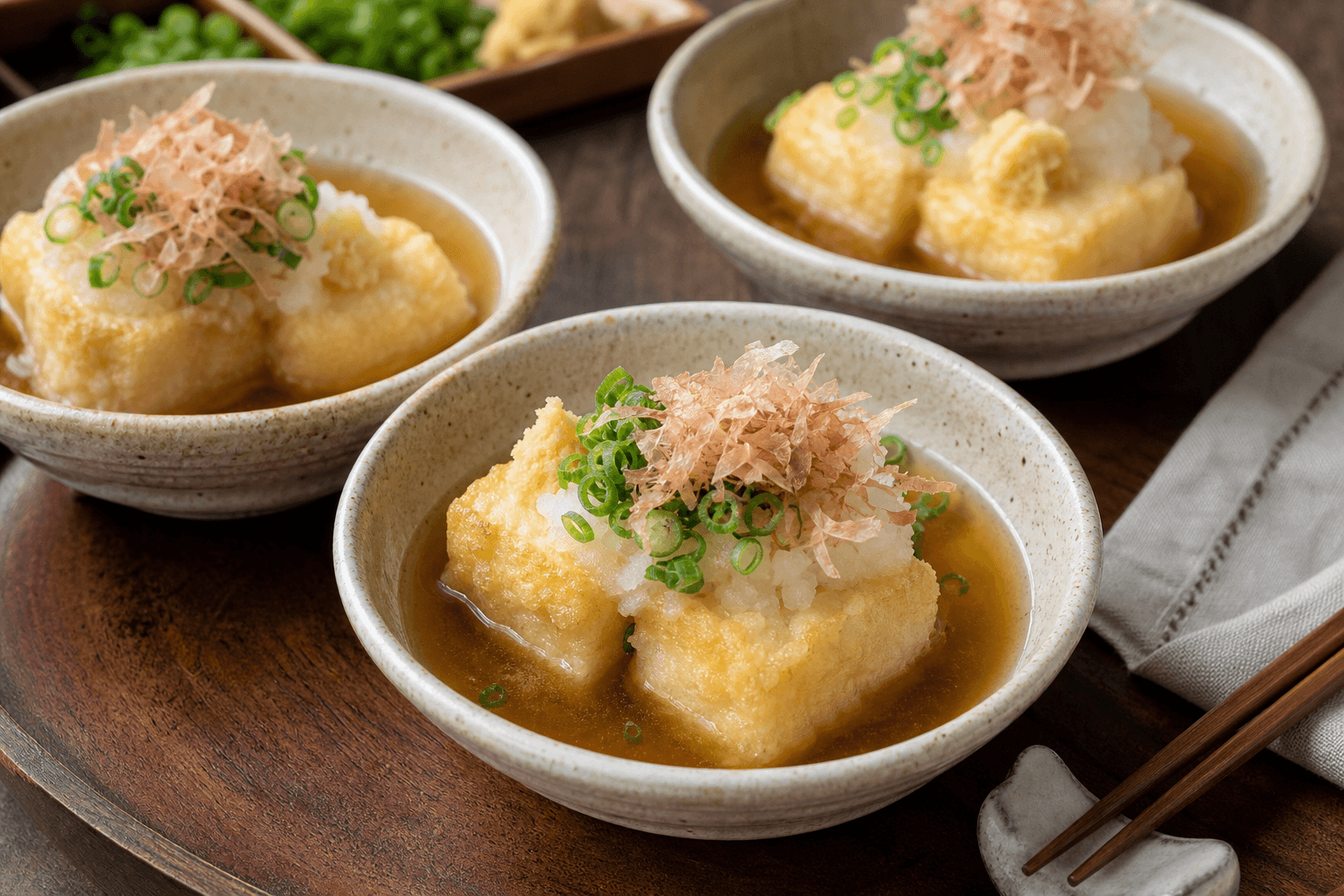

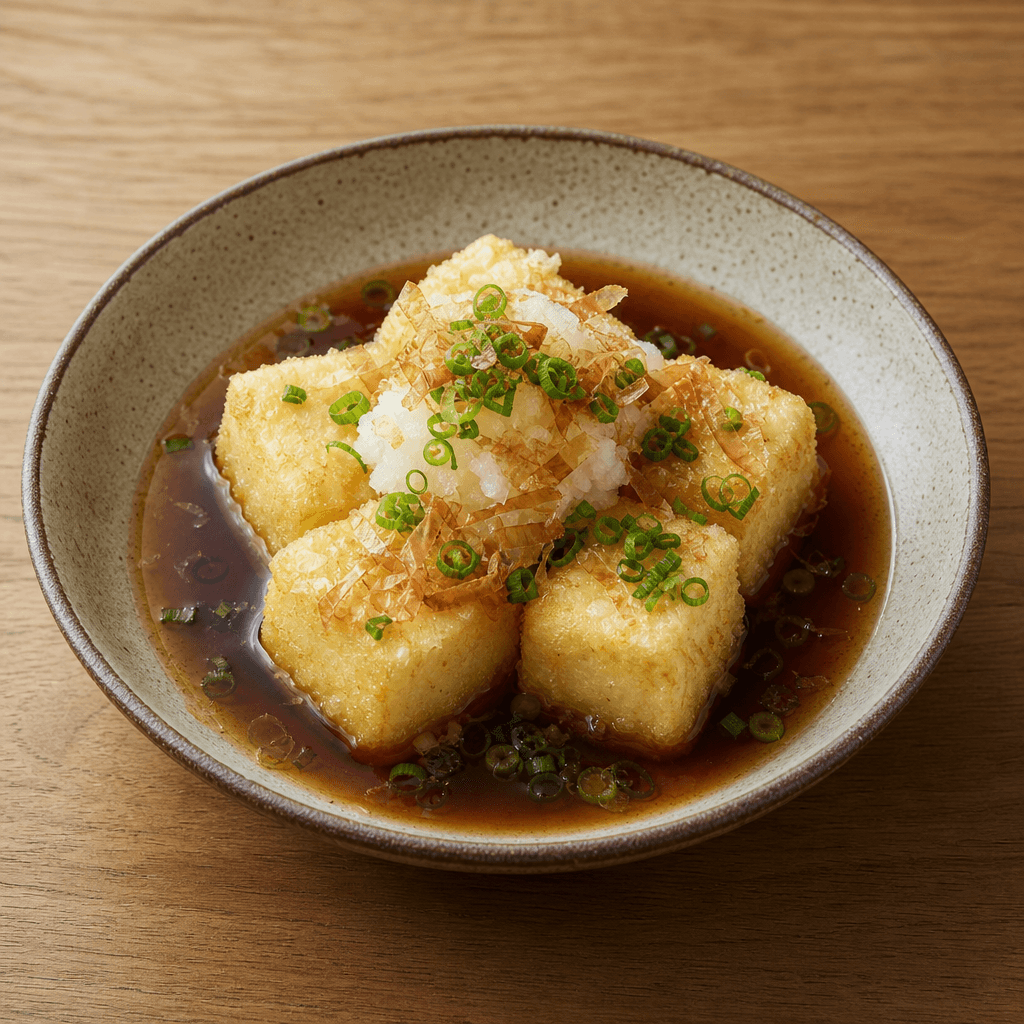
Tofu Agedashi
 Entrante45 min4 porcionesMedia
Sobre esta receta
Un clásico amado de izakaya japonés — tofu sedoso o suave se espolvorea ligeramente con almidón de papa, se fríe hasta que el exterior queda delicadamente crujiente, y luego se anida en un caldo dashi sabroso y rico en umami, potenciado con salsa de soya y mirin. La magia está en el contraste: la costra fina como gasa se suaviza ligeramente en el caldo tibio, creando un bocado sedoso que se derrite en la boca. Cubierto con daikon rallado, jengibre y copos de bonito, este plato es elegante, reconfortante y sorprendentemente fácil de hacer en casa.
Instrucciones
- 1
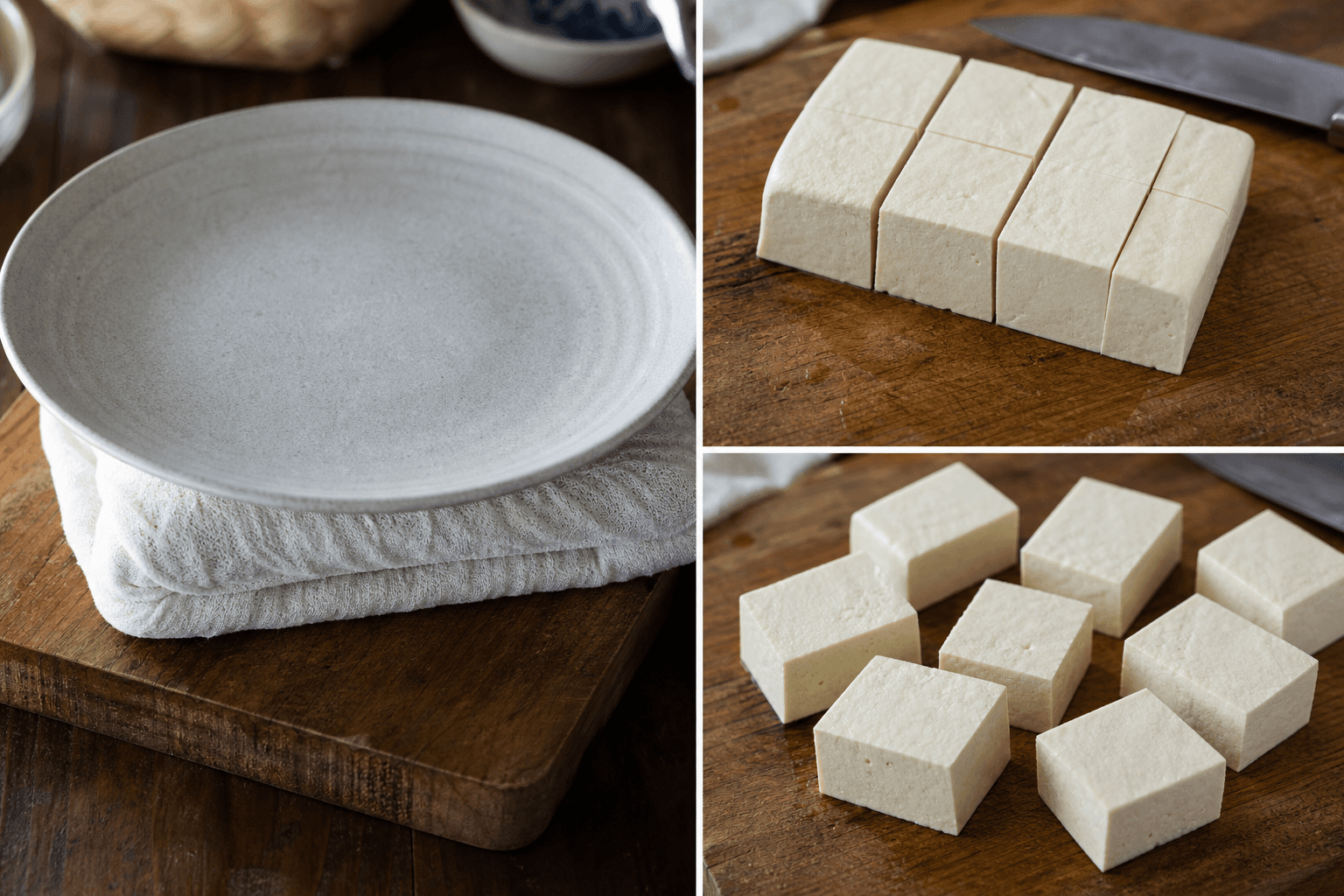
Drain the tofu and wrap it in 3–4 layers of paper towels or a clean kitchen towel. Set a heavy plate or cutting board on top and press for at least 15–20 minutes to remove as much moisture as possible. The drier the tofu, the crispier and safer the fry. After pressing, cut the block into 6–8 equal rectangular pieces, roughly 1.5 inches thick.
- 2
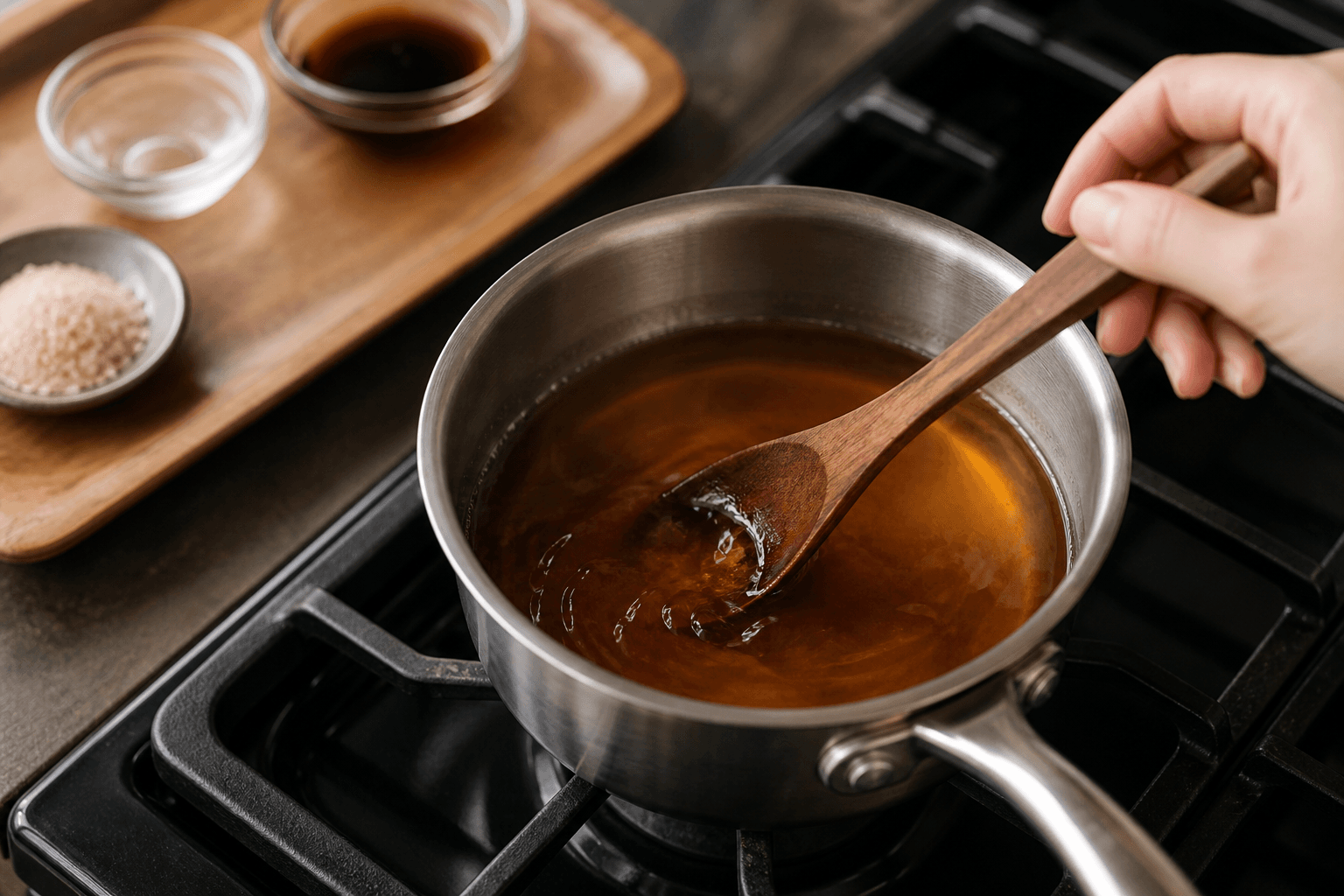
Combine the dashi stock, Soy Sauce, Mirin, and Sugar in a small Saucepan over ^[medium heat]. Stir gently and bring just to a simmer until the Sugar dissolves, about 2–3 minutes. Taste and adjust — it should be savory, slightly sweet, and light. Keep warm on the lowest heat setting.
- 3
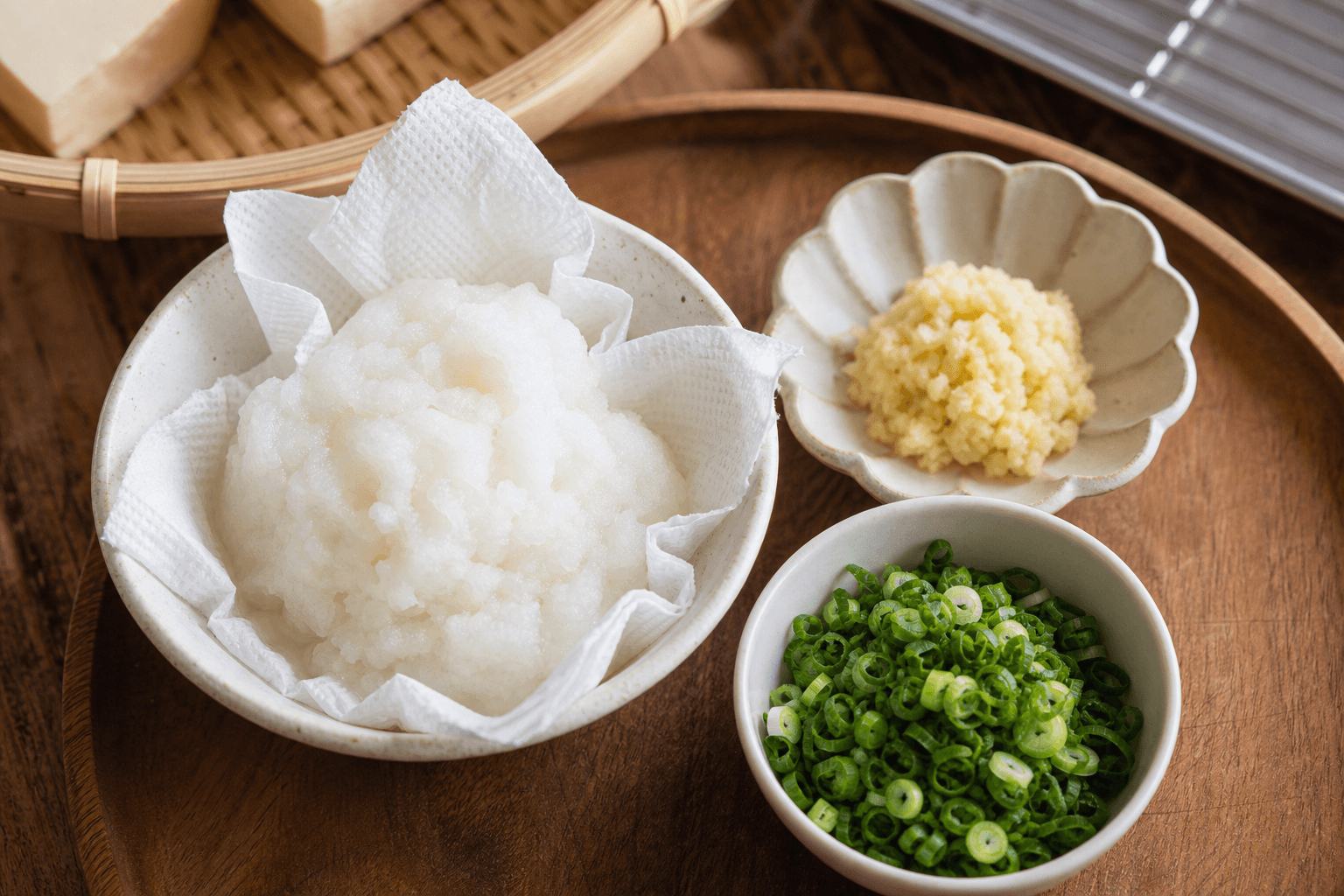
Prepare all garnishes before frying: grate the Daikon Radish and squeeze out excess moisture in a paper towel, grate the Ginger, and slice the Green Onions. Set aside in small bowls — you want everything ready to go the moment the tofu comes out of the oil.
- 4
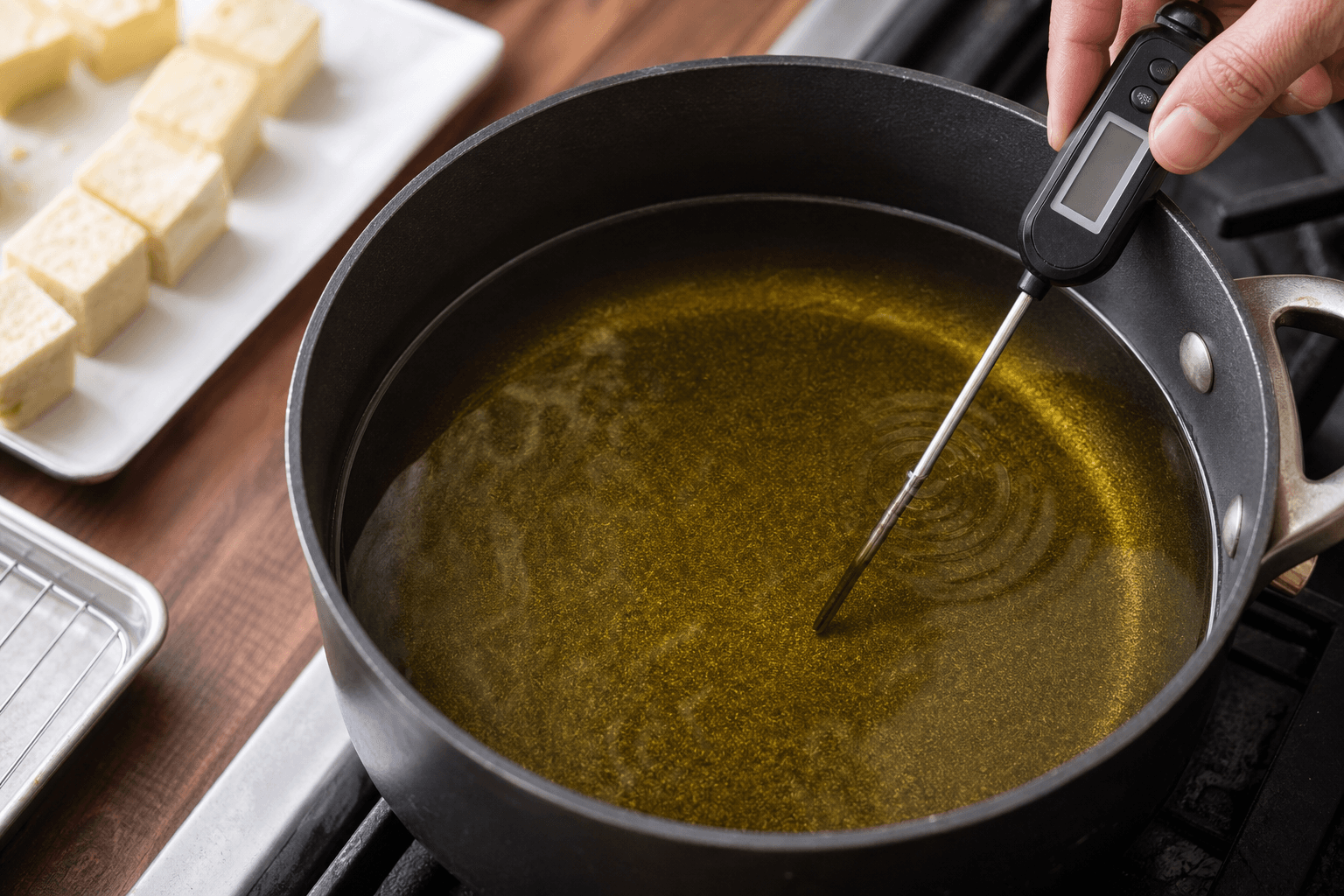
Pour about 1.5–2 inches of Neutral Oil into a deep Skillet or heavy-bottomed Saucepan. Heat over ^[medium-high heat] to ![340–360°F]. Use a Meat Thermometer for accuracy — this temperature range gives a light, crisp crust without burning.
- 5
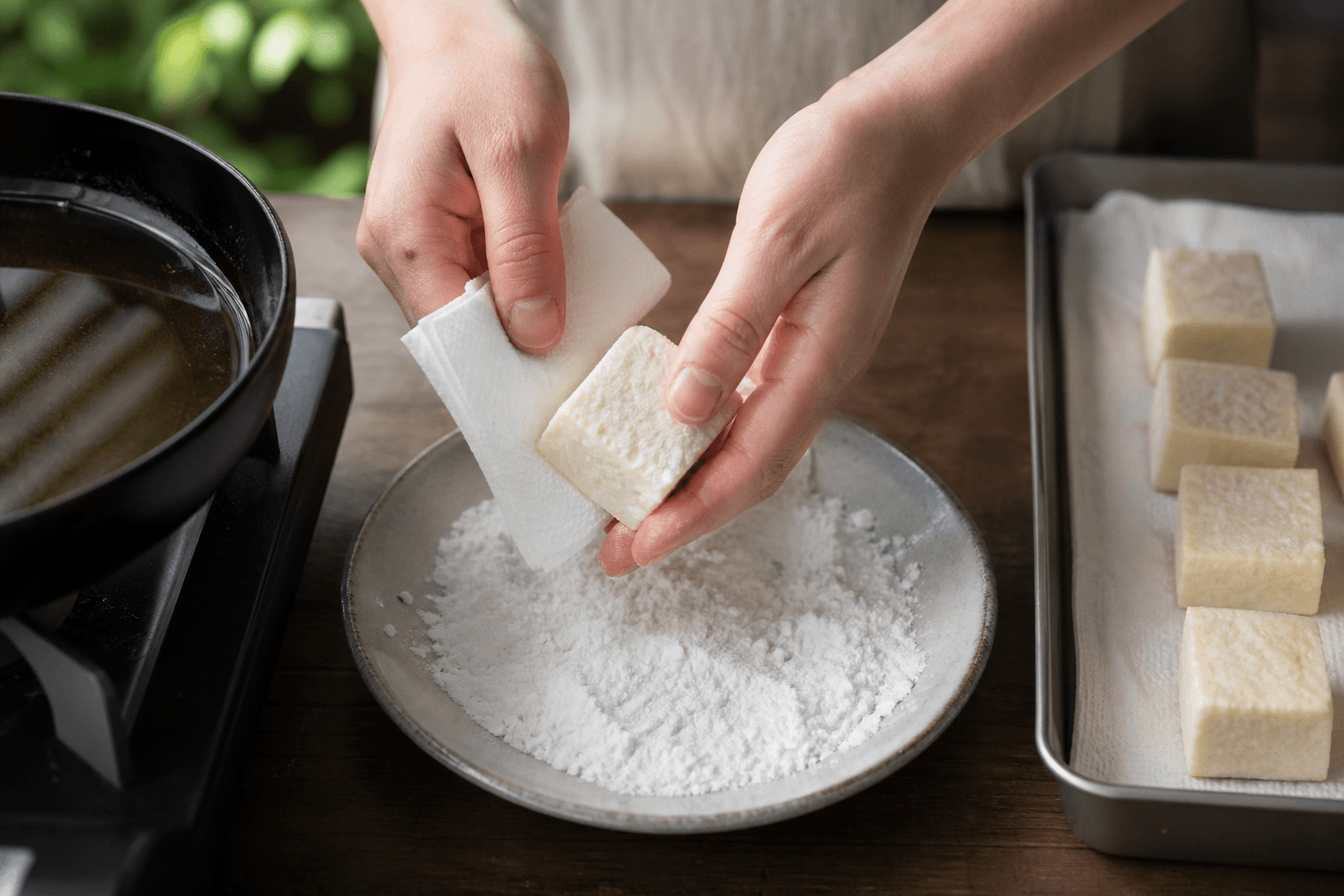
Spread the Potato Starch Katakuriko in a shallow dish. Just before frying, gently pat each tofu piece dry once more with a paper towel, then dredge all sides thoroughly in the Potato Starch Katakuriko, shaking off any excess. Coat only the pieces you're about to fry — do not coat them in advance, or the Potato Starch Katakuriko will become gummy.
- 6
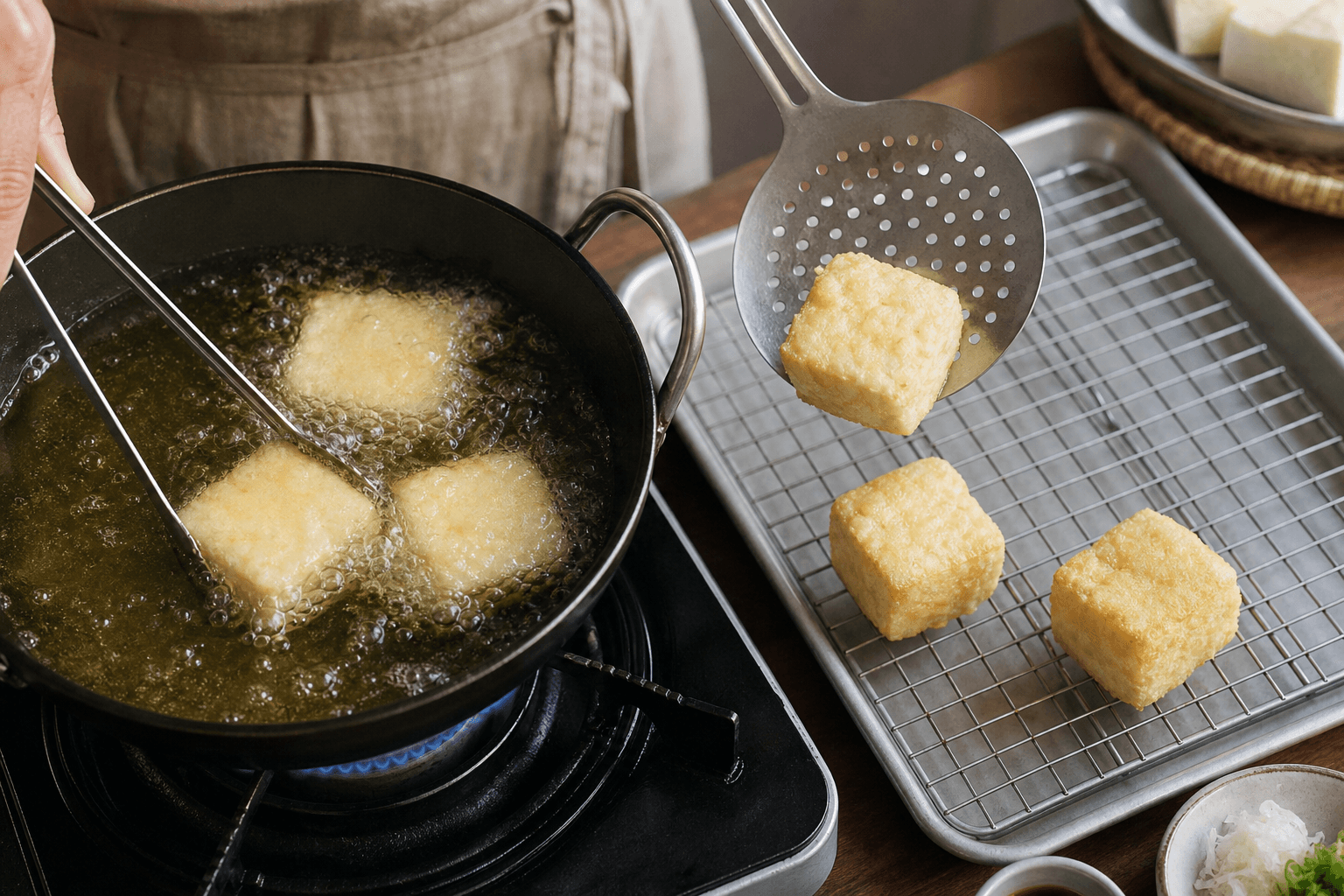
Carefully lower 3–4 tofu pieces into the hot oil using Tongs or a Slotted Spoon. Fry in batches — do not crowd the pan. Fry for 3–4 minutes, turning gently halfway through, until the crust is pale golden and just set. Agedashi tofu should be lightly golden, not deep brown. Remove with a Slotted Spoon and drain on a Wire Rack set over a Baking Sheet (not paper towels, which trap steam and soften the crust). Repeat with the remaining pieces.
- 7
Divide the warm tsuyu broth among individual serving bowls (about 1/3 cup per bowl). Gently place 2 pieces of fried tofu into each bowl — they should be half-submerged in broth. Top each serving with a small mound of grated Daikon Radish, a pinch of grated Ginger, a scatter of Green Onions, and a small tuft of Katsuobushi Bonito Flakes. Serve immediately — the crust softens within minutes, which is part of the charm, but the first few bites are the best.