

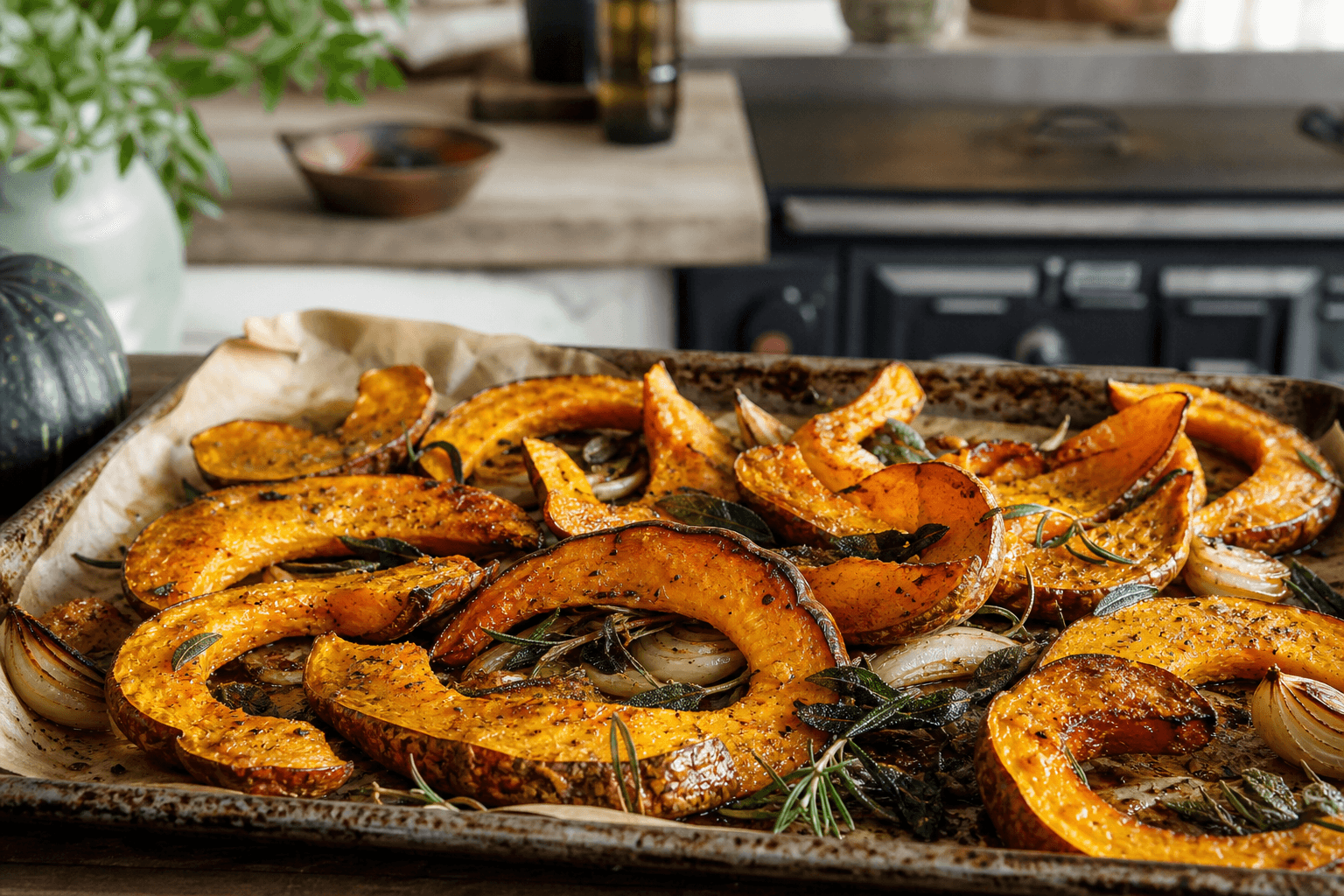

Each variation is built around a specific method and equipment. Pick one first, then the instructions, ingredients, and actions below update to match.
Cooking goal
- Total time
- 50 min
- Cook at
- 425°F
- Cook
- 30–50 min
Expect ~8°F rise while resting
Cooking goal
- Total time
- 50 min
- Cook at
- 425°F
- Cook
- 30–50 min
Expect ~8°F rise while resting
Servings
4
Servings
4
 2.5 lb Butternut Squash
 Salt
Salt Olive Oil
- 2.5 lb Butternut Squash
- Salt
- Olive Oil

Horno
Required for this method
Horno
Required for this method
Instructions
- 1
Prepping Butternut Squash for Roasting
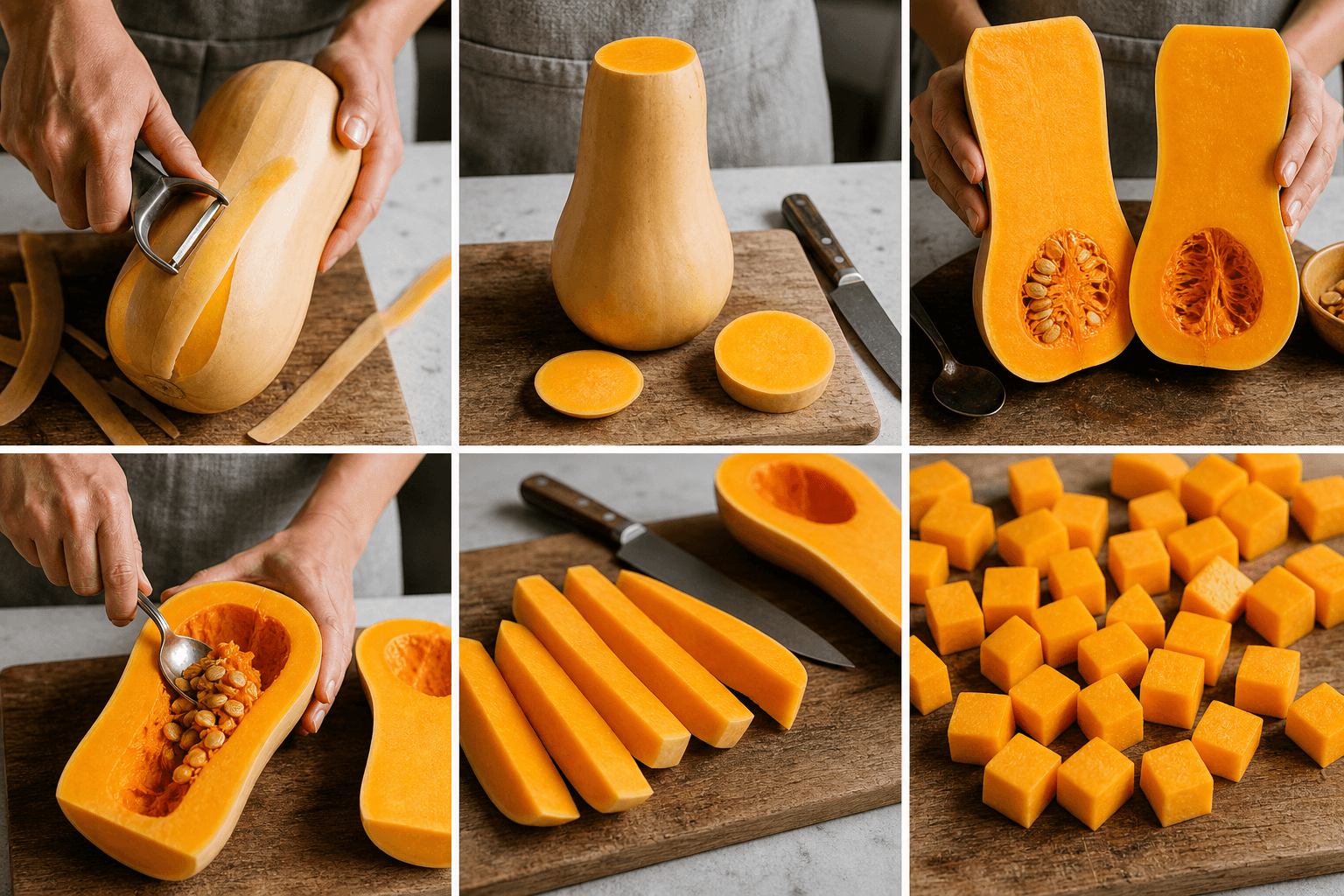
Peel the squash with a sturdy vegetable peeler. Slice off the top and bottom, stand it upright, and cut in half lengthwise. Scoop out the seeds with a large spoon. Cut each half into slices, then crosscut into 1-inch cubes — keep pieces consistent so they cook evenly. Pat dry if wet, then toss in a bowl with olive oil, salt, and pepper until evenly coated. Season generously. Line your sheet pan(s) with parchment or foil before you start.
- 2
Roasting Butternut Squash
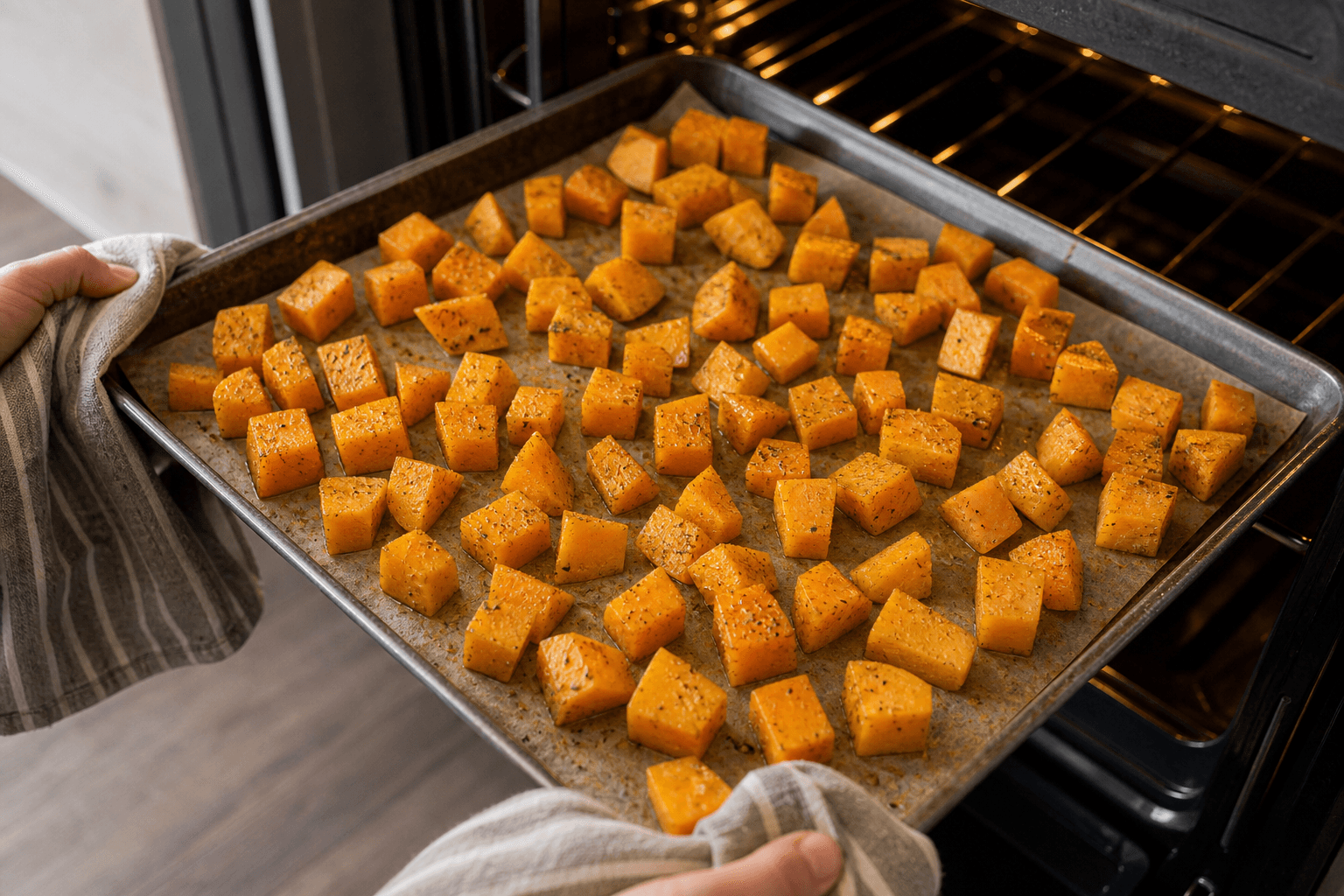
Preheat oven to 400–425°F (let it fully preheat before adding squash). Spread cubes in a single layer on a sheet pan — no crowding or overlapping, or they'll steam instead of roast. Use two pans if needed. Roast in the center of the oven for 30–50 minutes: 1-inch cubes at 400°F take 30–35 minutes; larger pieces or 425°F take 40–50 minutes. At the 15–20 minute mark, shake or flip the squash for even browning. Continue roasting until edges are golden and caramelized.
- 3
Doneness and Serving
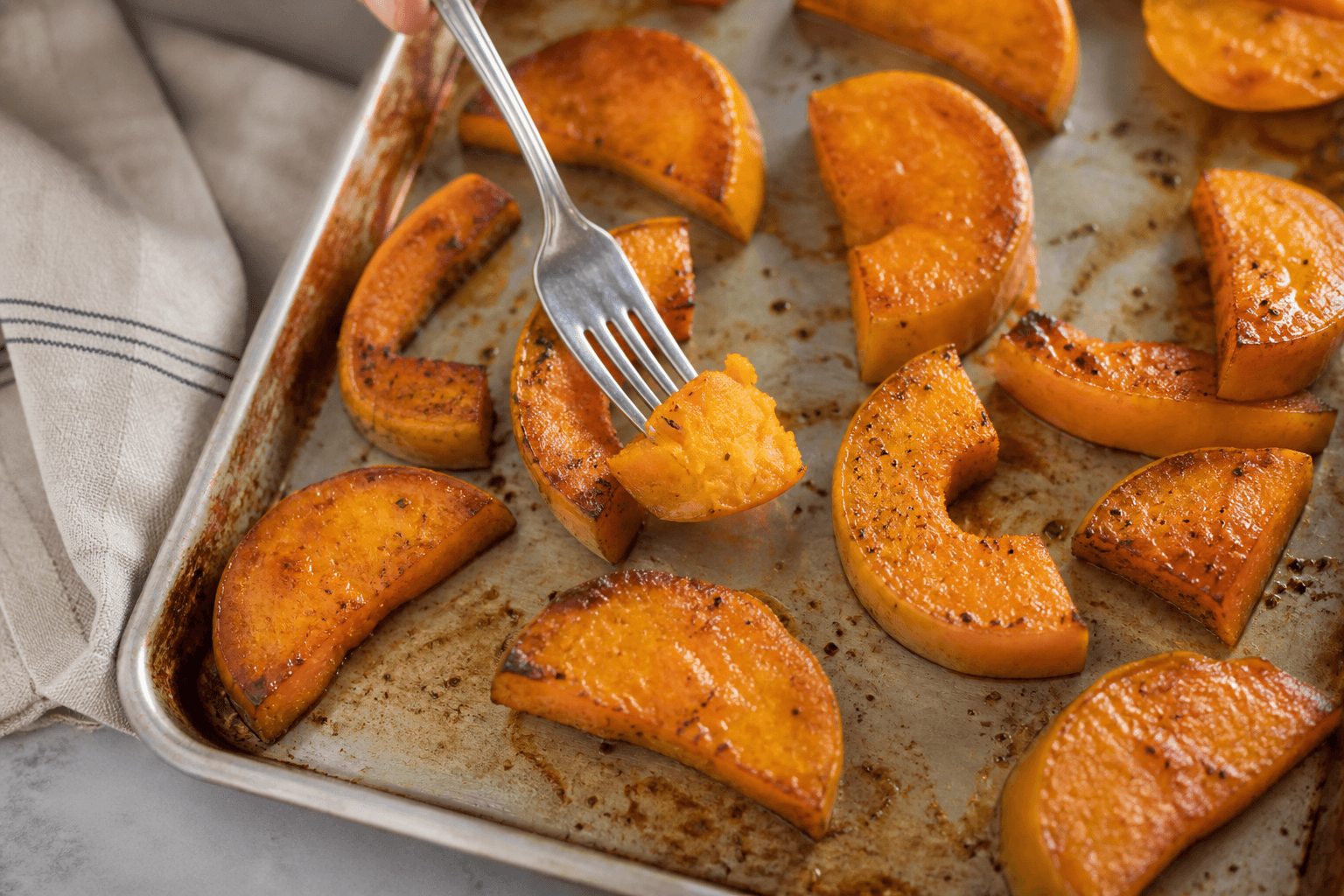
Done when edges are browned and caramelized and a fork slides through the thickest piece with no resistance — tender all the way through, not mushy. If browning outside but still firm inside, lower heat and roast another 5–10 minutes. Rest on the pan a couple of minutes before serving. Finish with salt and pepper, or add feta, balsamic glaze, fresh sage, or toasted walnuts. Leftovers keep 3–4 days refrigerated. Reheat at 350°F or microwave. Don't crowd the pan — use extra pans if needed.
Frequently asked questions
- How long does it take to cook Calabaza de Invierno?
- Most Calabaza de Invierno methods on this guide take about 50 minutes from prep through resting. Pick a method below for exact hands-on and cook times.
- What temperature should Calabaza de Invierno be cooked to?
- For best results, cook at 425°F. Use an instant-read thermometer and follow the doneness options on this page.
- What are the best ways to cook Calabaza de Invierno?
- This guide covers Roasted, Microwaved, Air-Fried. Each method includes step-by-step instructions with times and temperatures tuned for Calabaza de Invierno.
- Can I cook Calabaza de Invierno different ways?
- Yes. Choose a cooking method on this page — oven, stovetop, grill, air fryer, and more — to see equipment, timing, and technique-specific steps.
Event planning
Hosting a dinner? Coordinate who brings what
Create a shareable signup page for potlucks and group meals — guests RSVP, claim dishes, and see open slots.
- One shareable link — no more spreadsheet chaos
- Guests RSVP, add headcount, and claim exactly what they bring
60-day free trial · No credit card required