

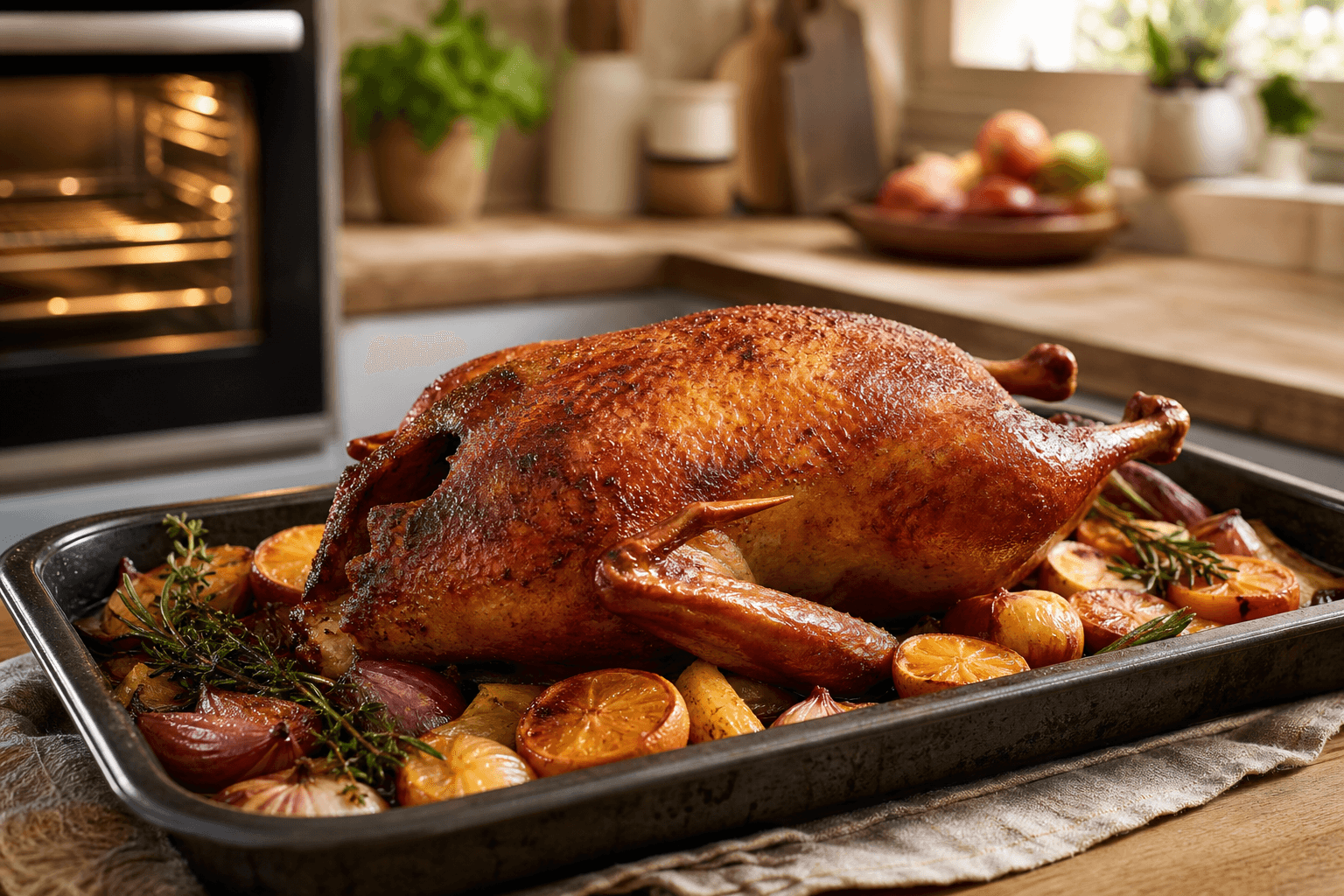

Cada variante se basa en un método y un equipamiento concretos. Elige una y las instrucciones, los ingredientes y las acciones de abajo se actualizarán.
Objetivo de cocina
- Tiempo total
- 2h 20m
- Cocinar a
- 177°C
- Temp. interna
- 57°C
- Pull at
- 53°C
- Cocción
- 1 hr 30 min–2 hr 20 min
Expect ~8°F rise while resting
Objetivo de cocina
- Tiempo total
- 2h 20m
- Cocinar a
- 177°C
- Temp. interna
- 57°C
- Pull at
- 53°C
- Cocción
- 1 hr 30 min–2 hr 20 min
Expect ~8°F rise while resting
Raciones
4
Raciones
4
 910 g Duck
 Salt
 Olive Oil
- 910 g Duck
- Salt
- Olive Oil

Horno
Necesario para este método
Horno
Necesario para este método
Instrucciones
- 1
Prep the Duck
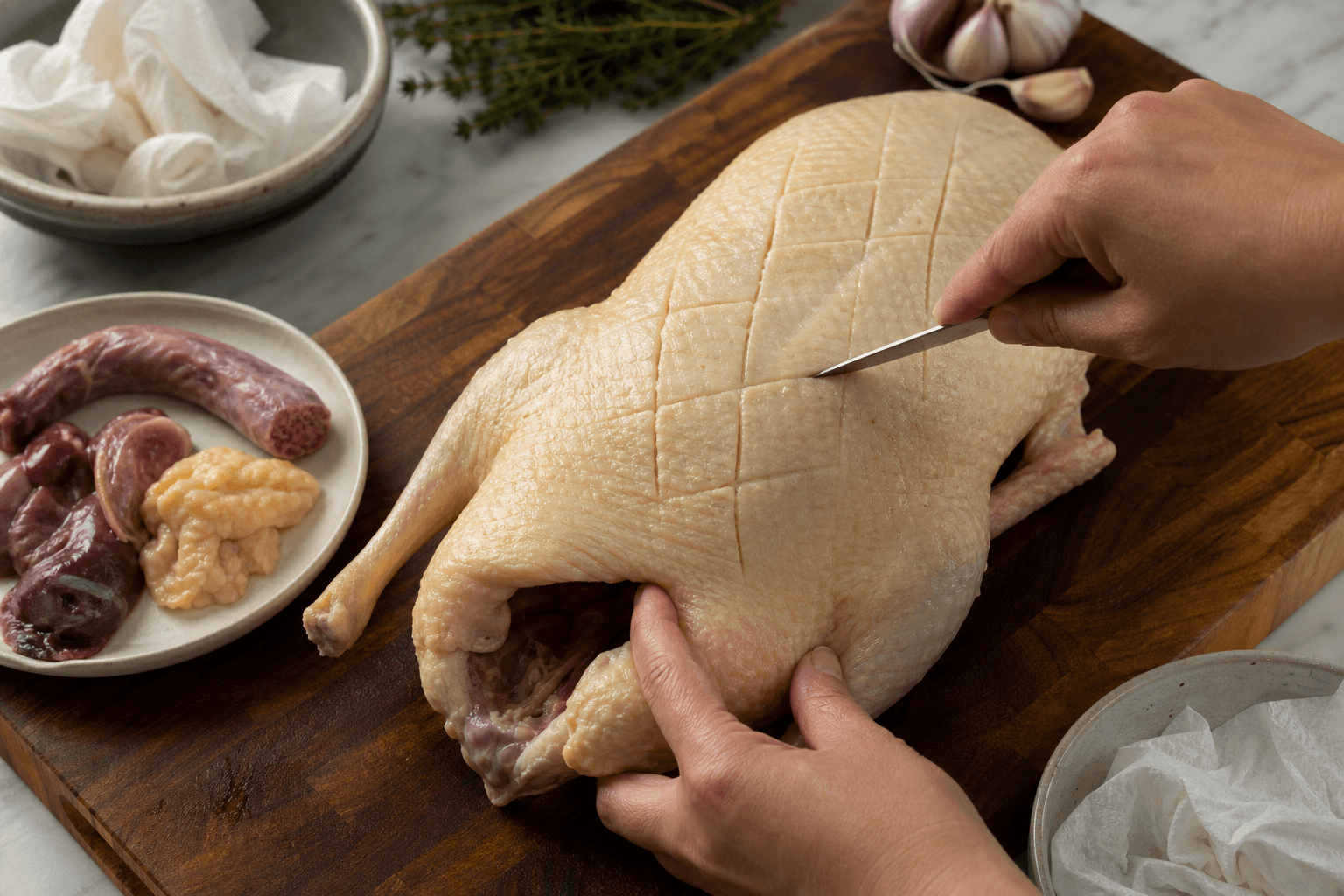
Remove duck from the fridge 20–30 minutes before cooking. Pull out neck, giblets, and excess cavity fat; trim loose neck skin. Rinse under cold water and pat completely dry inside and out — dry skin is critical for crispiness. Score breast skin in a crosshatch and prick all over, especially at breast and thighs; pierce skin and fat only, not the meat. Season generously with salt and pepper inside and out. Tie legs with kitchen twine, tuck wing tips behind the back. Place breast-side up on a rack in a roasting pan with about an inch of water to manage drippings and reduce smoke.
- 2
Oven-Roast the Duck
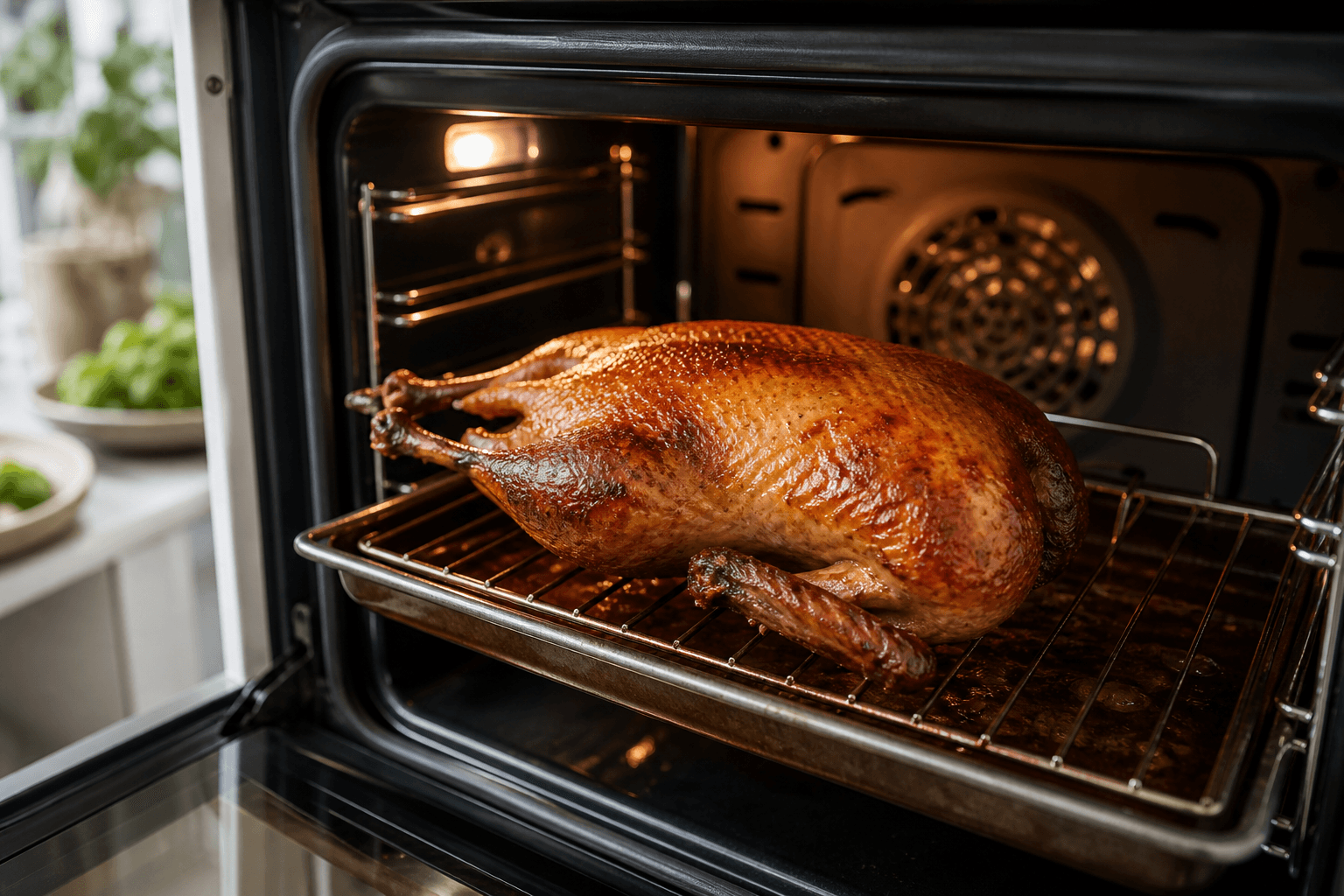
Preheat oven to 163°C – 177°C. Place duck on a rack in the middle of the oven and roast uncovered. Allow 15–20 minutes per pound — a 4–5 lb duck takes roughly 90–140 minutes total. Do not open the oven repeatedly; consistent low heat renders the fat properly. Around the 60-minute mark, spoon off excess fat from the pan to prevent smoking. Skin should be turning golden and tightening. For crisp skin, raise heat to 204°C – 232°C for the final 10–15 minutes. If using a honey or sugar glaze, apply only in the last 5–10 minutes and watch closely to avoid burning. Keep the duck uncovered throughout — foil traps steam and ruins the skin.
- 3
Revisa la cocción, reposa y talla
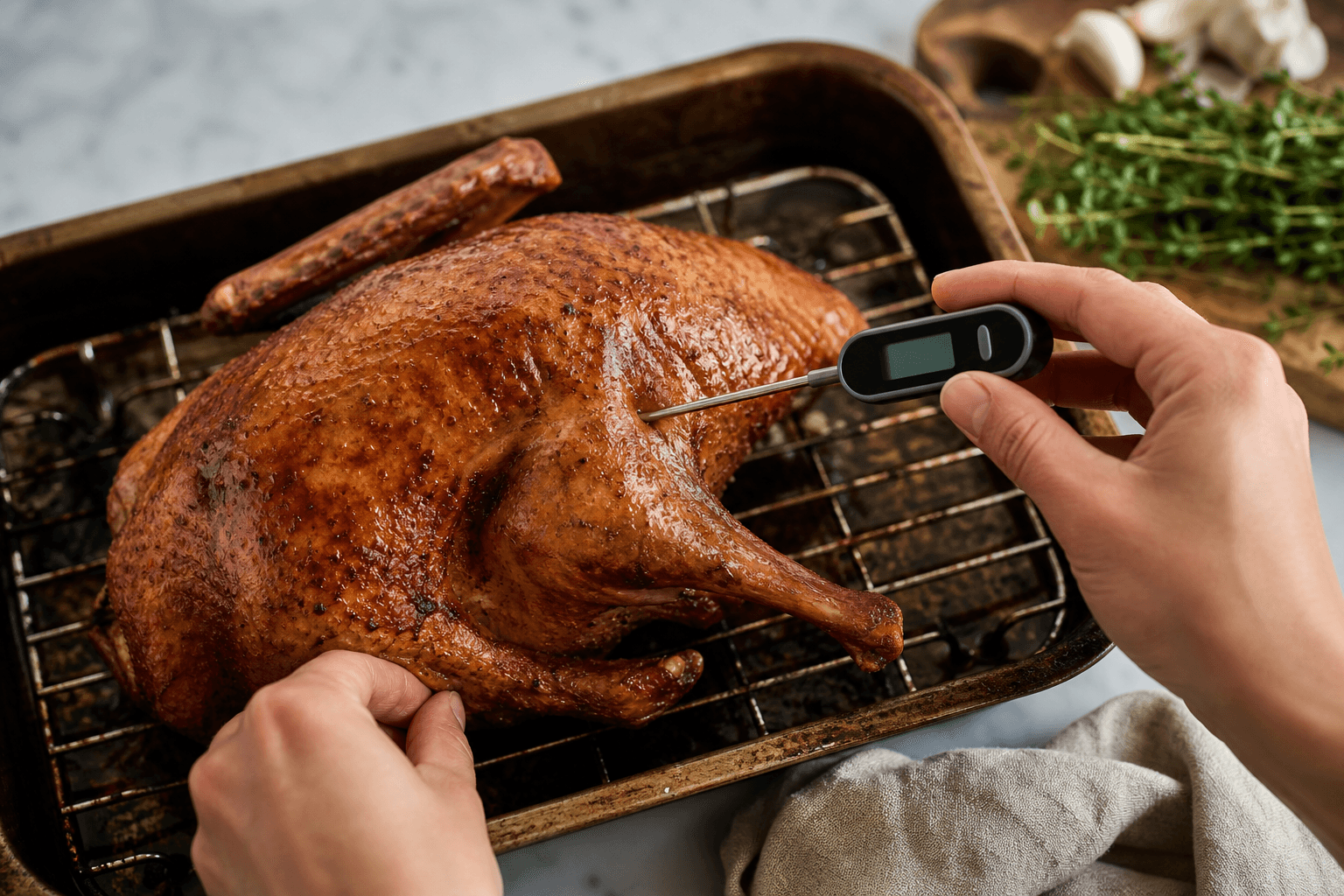
El muslo debe alcanzar 74°C mínimo — objetivo 79°C – 82°C para carne oscura completamente derretida. El pecho es seguro a 74°C y puede mostrar un ligero rosado. Siempre usa un termómetro; el color solo es poco confiable. Retira del horno y reposa sin cubrir al menos 15 minutos antes de tallar. Esto mantiene los jugos en la carne, no en la tabla. Errores clave a evitar: piel mojada antes de asar, saltar marcar grasa, y sacar demasiado temprano. Desgrasa la grasa de pato de los goteos de la bandeja antes de hacer salsa. Guarda la grasa — excelente para asar vegetales.
Organización de eventos
¿Organizas una cena? Coordina quién trae qué
Crea una página de inscripción que puedes compartir para comidas compartidas y comidas en grupo: los invitados confirman, eligen platos y ven los huecos libres.
- Un único enlace para compartir, sin caos de hojas de cálculo
- Los invitados confirman, indican cuántos van y eligen justo lo que llevan
Prueba gratis de 60 días · Sin tarjeta de crédito