

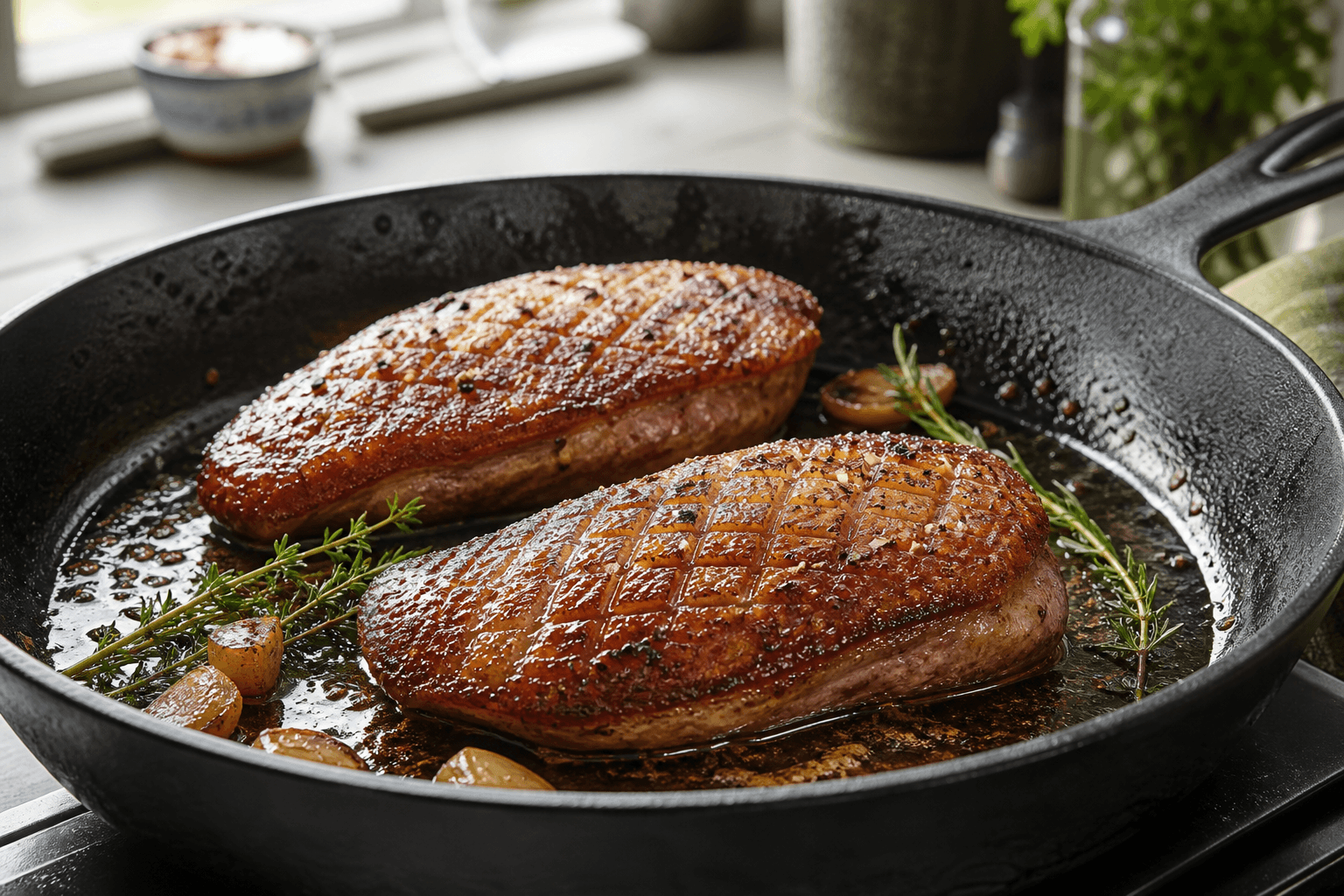

Each variation is built around a specific method and equipment. Pick one first, then the instructions, ingredients, and actions below update to match.
Cooking goal
- Total time
- 18 min
- Cook at
- 135°F
- Internal temp
- 135°F
- Pull at
- 132°F
- Cook
- 12–18 min
Expect ~3°F rise while resting
Cooking goal
- Total time
- 18 min
- Cook at
- 135°F
- Internal temp
- 135°F
- Pull at
- 132°F
- Cook
- 12–18 min
Expect ~3°F rise while resting
Servings
4
Servings
4
 2 lb Duck
 Salt
Salt Olive Oil
- 2 lb Duck
- Salt
- Olive Oil

Sartén
Required for this method
Sartén
Required for this method
Instructions
- 1
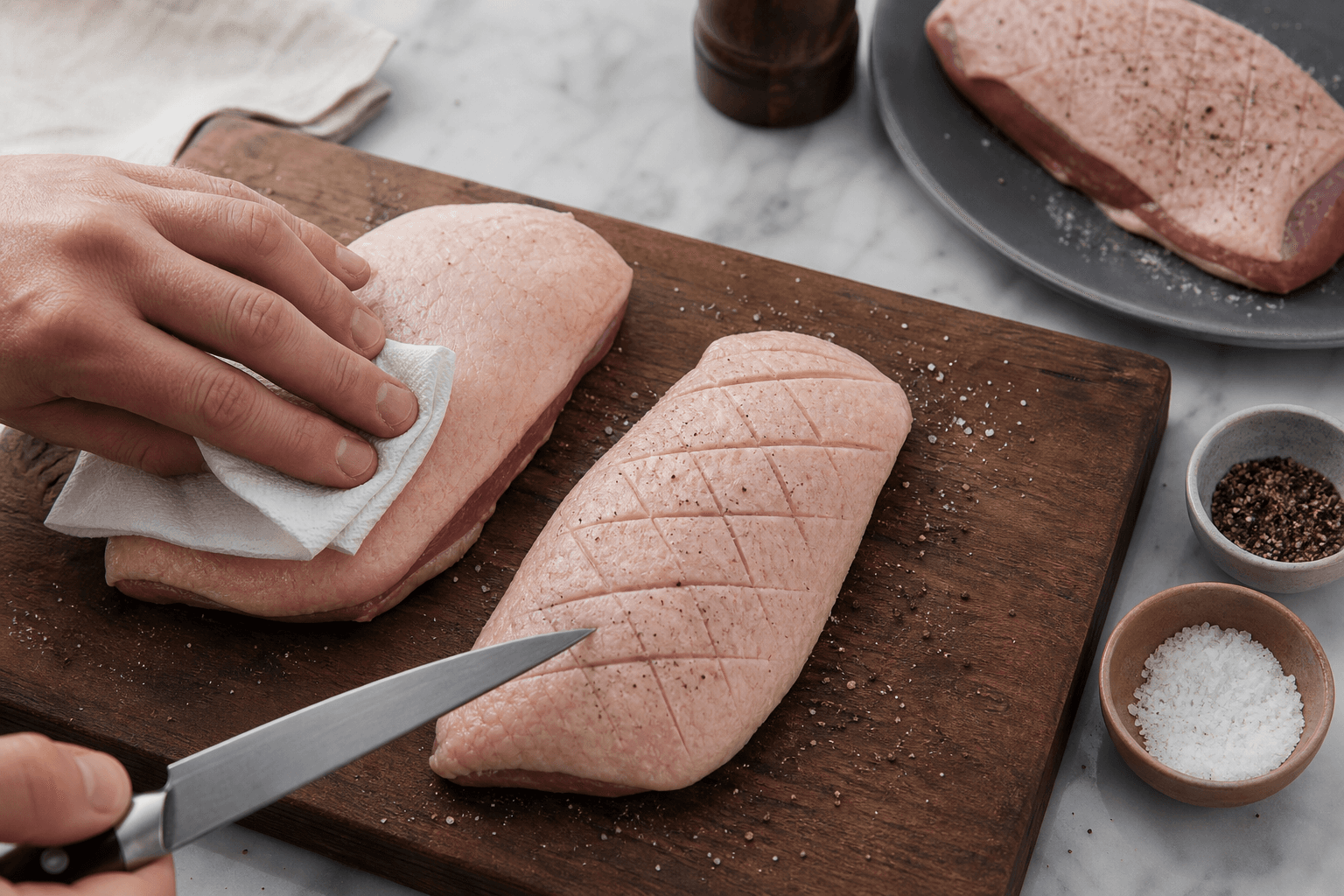
Prep the Duck Breast
Pat the breast completely dry with paper towels — moisture kills crispiness. Score the skin in a crosshatch pattern, cuts spaced 3/4 to 1 inch apart; cut through fat only, not the flesh. Season both sides with salt and pepper. For best results, refrigerate uncovered up to 8 hours ahead. If the breast is uneven, lightly pound between plastic wrap to roughly 1/2 to 3/4 inch thickness for even cooking.
- 2
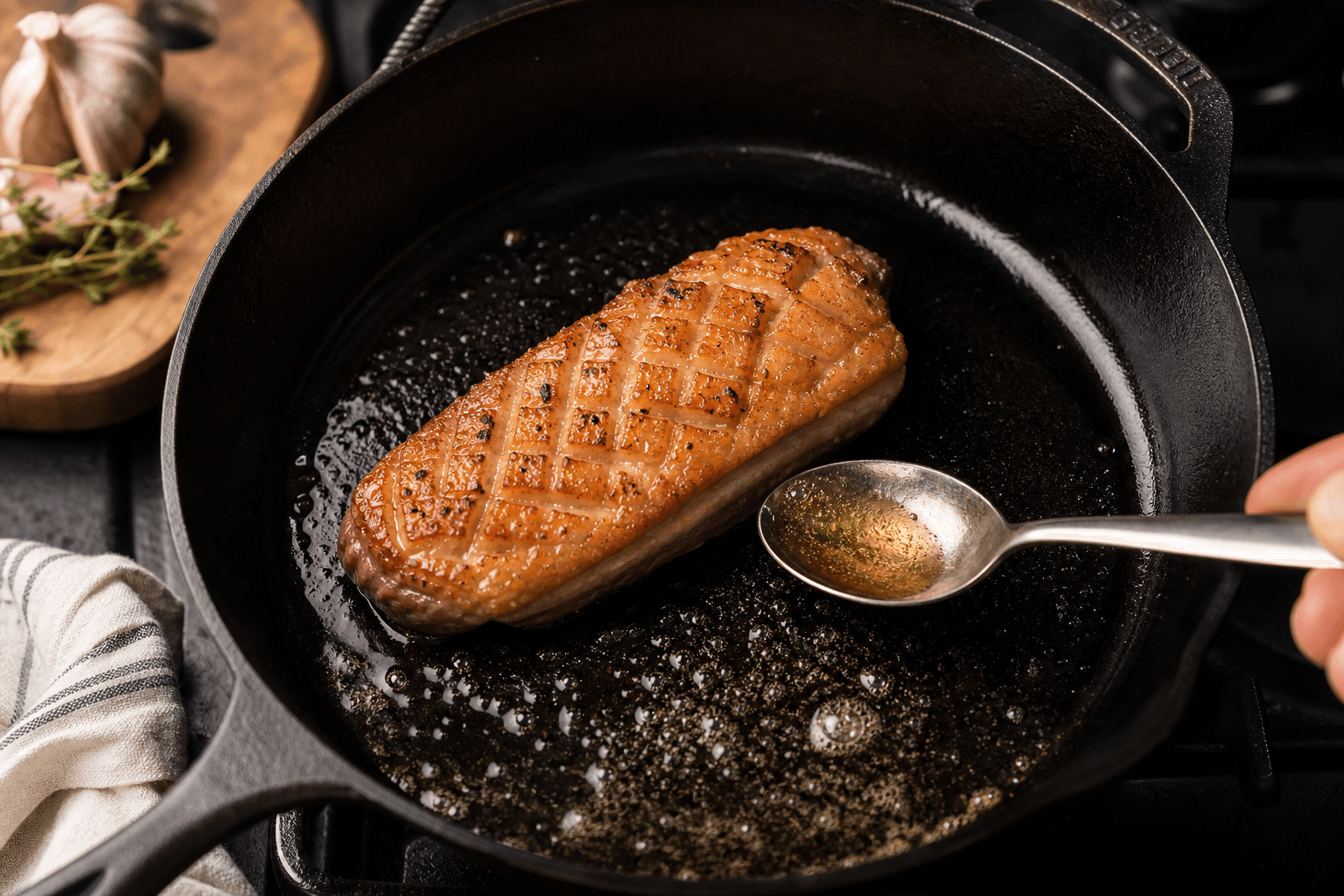
Sella el pecho de pato en una sartén
Coloca el pecho de pato con la piel hacia abajo en una sartén pesada fría (hierro fundido o acero inoxidable). Lleva el calor a fuego medio-alto y permite que la grasa se derrita gradualmente — este método de inicio en frío es clave para piel crujiente. Drena el exceso de grasa de la sartén a medida que se acumula. Coce con la piel hacia abajo 7–10 minutos hasta que la piel sea marrón dorado profundo y notoriamente crujiente. No lo apresures. Voltea, reduce el calor a fuego medio, y coce el lado de la carne 4–8 minutos más. Temperatura interna objetivo: 135°F para término medio — revisa con un termómetro de lectura instantánea en la parte más gruesa. Tiempo total de cocción: aproximadamente 12–18 minutos. Opcionalmente termina en un horno a 250°F después de sellar brevemente el lado de la carne para un calor interior más uniforme.
- 3
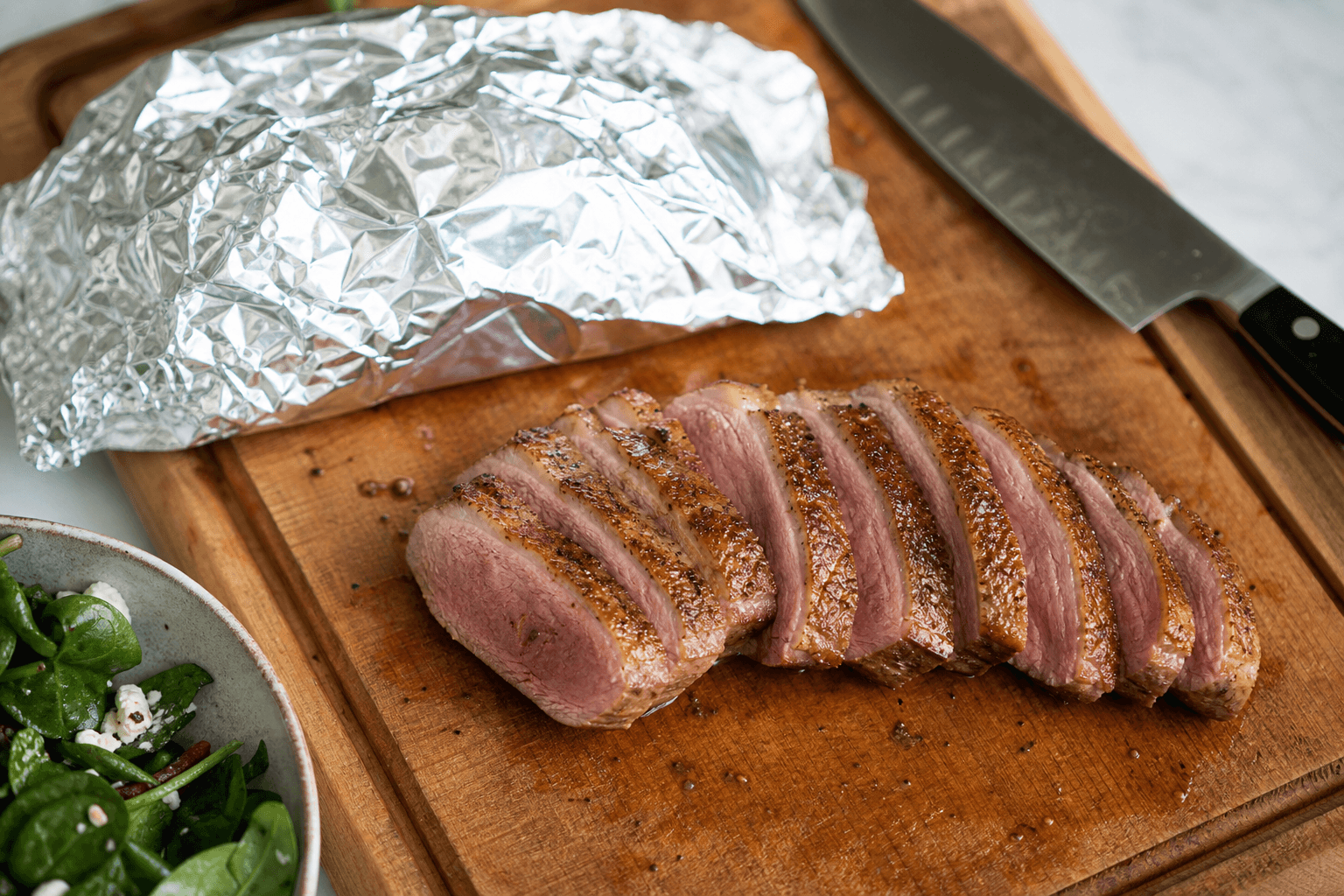
Rest, Slice, and Serve
Transfer duck breast to a cutting board or rack and tent loosely with foil. Rest at least 5–10 minutes before slicing — this keeps the juices inside. At 135°F the center will be slightly pink (medium-rare). Slice thinly on a diagonal or into 1-inch widthwise pieces and fan on the plate. Use pan drippings for a quick sauce if desired. Note: USDA recommends 165°F for poultry; 135°F is a culinary medium-rare preference — cook to your comfort level.
Frequently asked questions
- How long does it take to cook Pato?
- Most Pato methods on this guide take about 18 minutes from prep through resting. Pick a method below for exact hands-on and cook times.
- What temperature should Pato be cooked to?
- For best results, reach an internal temperature of 135°F. Use an instant-read thermometer and follow the doneness options on this page.
- What are the best ways to cook Pato?
- This guide covers Seared, Roasted. Each method includes step-by-step instructions with times and temperatures tuned for Pato.
- Can I cook Pato different ways?
- Yes. Choose a cooking method on this page — oven, stovetop, grill, air fryer, and more — to see equipment, timing, and technique-specific steps.
Event planning
Hosting a dinner? Coordinate who brings what
Create a shareable signup page for potlucks and group meals — guests RSVP, claim dishes, and see open slots.
- One shareable link — no more spreadsheet chaos
- Guests RSVP, add headcount, and claim exactly what they bring
60-day free trial · No credit card required